Cadiz Constitution
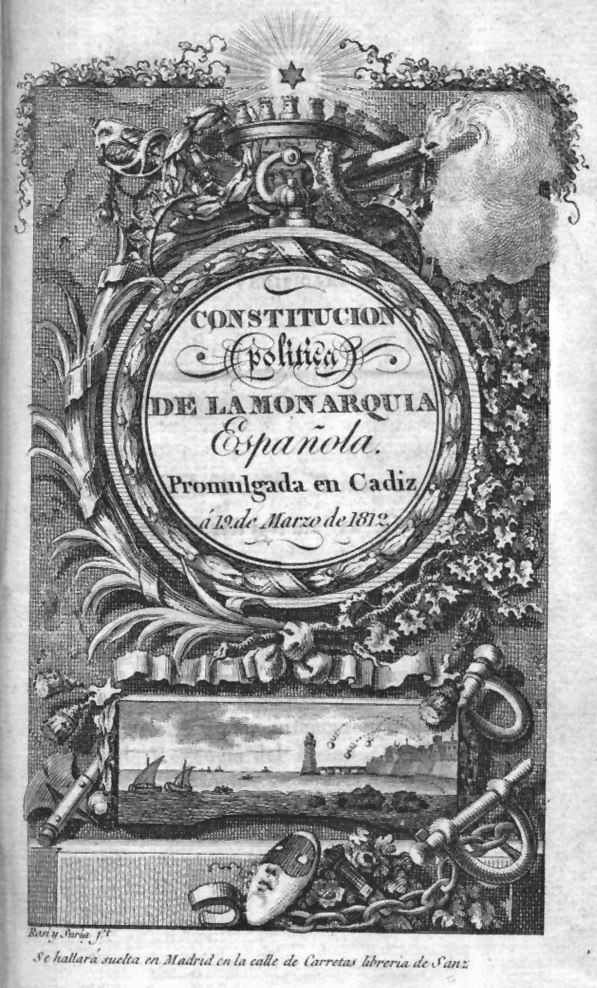
Wartime legislators asserted national sovereignty and constitutional limits on the Spanish monarchy.
- When
- 1812–1814 and later revivals
- Where
- Cadiz, Spain, and the Spanish monarchy
Wartime legislators asserted national sovereignty and constitutional limits on the Spanish monarchy.
Background
Constitution-making during invasion
The Napoleonic occupation and crisis of royal authority created space for representatives meeting in Cadiz to redesign government. The constitution emerged during war, while the monarchy's overseas territories were also undergoing profound political conflict.[2]
What happened
- 19 March 1812
A constitutional monarchy
The document asserted national sovereignty and separated governmental powers. It provided a representative legislature and an indirect electoral system. Its ambitions extended beyond mainland Spain, making questions of representation across the empire central rather than incidental.[2]
Impact & evidence
Liberal change remained unequal
The text protected Catholicism as the exclusive religion and did not establish equal political rights for everyone. Citizenship provisions and eligibility rules limited the apparent universality of representation. The constitution therefore combined a challenge to absolutism with significant exclusions.[3]
Aftermath & legacy
Repeal did not end its influence
Ferdinand VII abolished the constitution on returning to power in 1814. Later restorations and its influence abroad gave it a life beyond that short first period. It became a powerful example for constitutional movements even where its operation in Spain was interrupted.[2]
Sources & image credits (3)
- Wikipedia — Spanish Constitution of 1812 ↗
- Spanish Congress: Constitution of 1812 ↗
- Original text of the 1812 Constitution ↗
Cortes de Cádiz · Public domain Image source ↗