Brahmagupta's rules for zero and negative numbers
Rules for calculating with zero and negative quantities in Brahmagupta's astronomical mathematics.
- When
- 628 CE
- Where
- Indian subcontinent
Rules for calculating with zero and negative quantities in Brahmagupta's astronomical mathematics.
Background
Mathematics within astronomy
Brahmagupta's Brahmasphutasiddhanta organised astronomical knowledge alongside arithmetic and algebra. Its treatment of numbers belongs to a longer Indian mathematical tradition; earlier Indian texts and practices also contributed to the development of zero.[2]
What happened
- 628
Debts, fortunes and zero
The treatise explained positive and negative quantities through the language of fortunes and debts. It supplied rules for adding, subtracting and multiplying signed numbers, and recognised that subtracting a number from itself gives zero.[2]
Impact & evidence
A powerful extension with a remaining difficulty
The rules made zero and negative quantities usable in systematic calculation. Division by zero remained unresolved: Brahmagupta's assertion that zero divided by zero is zero does not agree with modern arithmetic. Recognising that limitation helps explain the historical achievement without turning it into a claim of modern completeness.[2]
Aftermath & legacy
Rules preserved through transmission
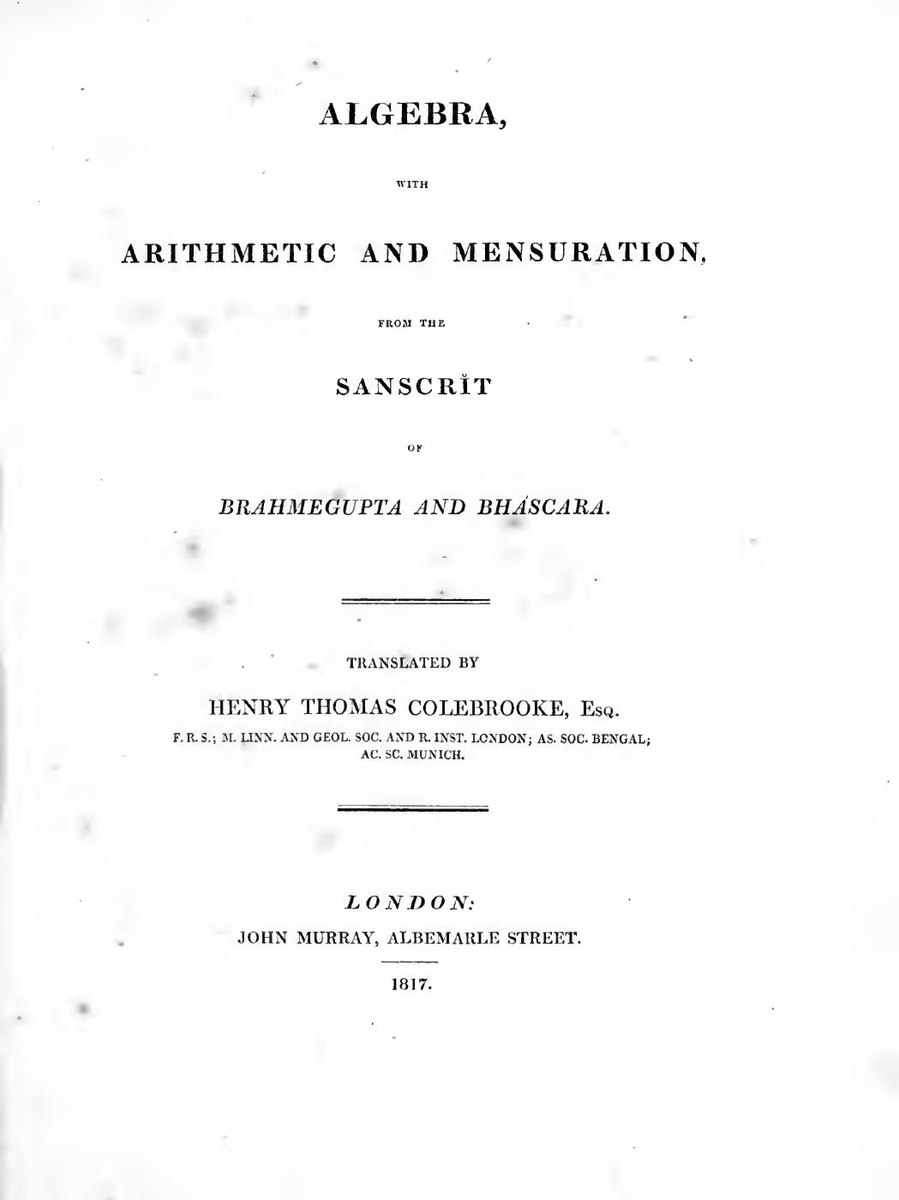
The mathematical chapters circulated through manuscript copying and commentary. Henry Thomas Colebrooke published an English translation in 1817, making the rules for debts, fortunes and zero accessible to another readership. The surviving text lets readers examine both the power of the arithmetic and the unresolved treatment of division by zero.[3]
Sources & image credits (3)
- Wikipedia — Brāhmasphuṭasiddhānta ↗
- University of St Andrews: Brahmagupta ↗
- Brahmagupta and Bhaskara: Colebrooke’s 1817 translation ↗
Henry Thomas Colebrooke, translator; John Murray, publisher, 1817 · Public domain Image source ↗