Black July anti-Tamil pogrom
Organised attacks on Tamil civilians, homes and businesses that transformed Sri Lanka’s conflict.
- When
- July 1983
- Where
- Sri Lanka, especially Colombo
Organised attacks on Tamil civilians, homes and businesses that transformed Sri Lanka’s conflict.
Background
Discrimination and escalating conflict
Black July followed years of anti-Tamil violence, discriminatory policies and the growth of armed separatism. On 23 July 1983, an LTTE ambush killed 13 Sri Lankan soldiers near Jaffna. The subsequent attacks targeted Tamil civilians far from that encounter, rather than those responsible for the ambush.[1]
What happened
- 24–30 July 1983
Targeted violence spread
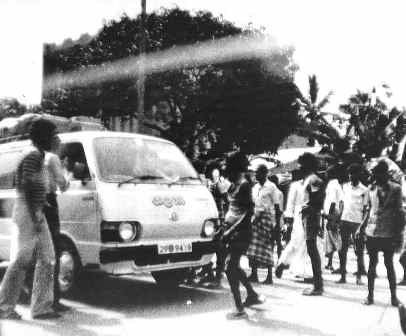
Mobs attacked Tamil neighbourhoods and businesses in Colombo and elsewhere, killing residents and burning property. Accounts describe the use of electoral information to identify Tamil households, participation by government supporters, and security personnel failing to protect victims. Some neighbours sheltered those at risk.[1]
Impact & evidence
Deaths and uprooting
Published estimates commonly range from several hundred to around 3,000 deaths. There is no complete agreed victim register. Destruction of homes and livelihoods drove extensive internal displacement and emigration. The displaced population was considerably larger than the estimated death toll.[1]
Deaths in state custody
Amnesty documented the failure to protect 53 Tamil detainees killed in Welikada prison, along with eyewitness accounts of security-force killings in the north. It criticised the absence of an adequate independent inquiry. The prison victims form part of the wider violence, not a separate total to add again to every Black July estimate.[2]
Aftermath & legacy
Protection and accountability
Amnesty stressed that attacks on security personnel could never justify arbitrary reprisals against civilians. Its contemporary record shows why Black July concerns both organised mob violence and the state’s responsibility to protect people, including those held in custody. The pogrom remains central to Tamil remembrance and demands for accountability.[2]
Sources & image credits (2)
Tamil Guardian; photographer not identified · Copyright retained by the rights holder Image source ↗