Atlantic Middle Passage and the slave-ship economy
The forced ocean crossing that sustained Atlantic slavery at immense human cost.
- When
- 16th–19th centuries
- Where
- Atlantic routes from Africa to the Americas
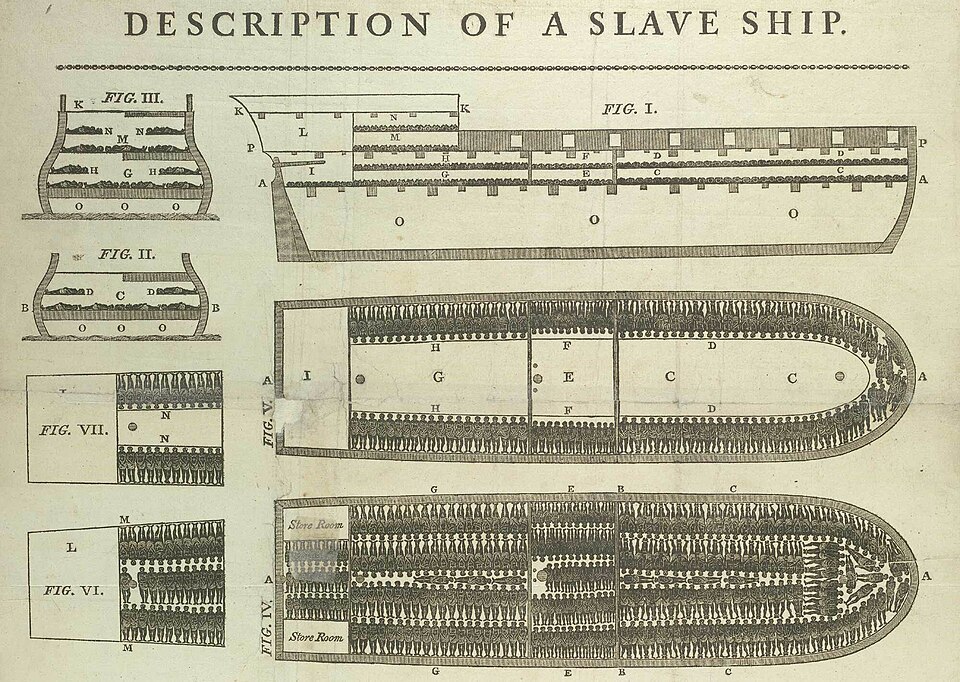
The forced ocean crossing that sustained Atlantic slavery at immense human cost.
Background
A commercial system built on captivity
European and American merchants organised voyages that bought captive Africans and transported them for sale. African intermediaries and political powers participated in capture and sale, while plantation demand and Atlantic finance sustained the traffic.[1]
A commercial circuit enforced by violence
European manufactured goods, captive people and plantation commodities formed connected Atlantic markets. Merchants converted sales of enslaved Africans into cargoes such as sugar, tobacco and rum. The voyage’s accounting concealed the coercion at its centre: the people transported had no freedom to negotiate the journey or the labour demanded after arrival.[1]
What happened
- Across centuries
Confinement at sea
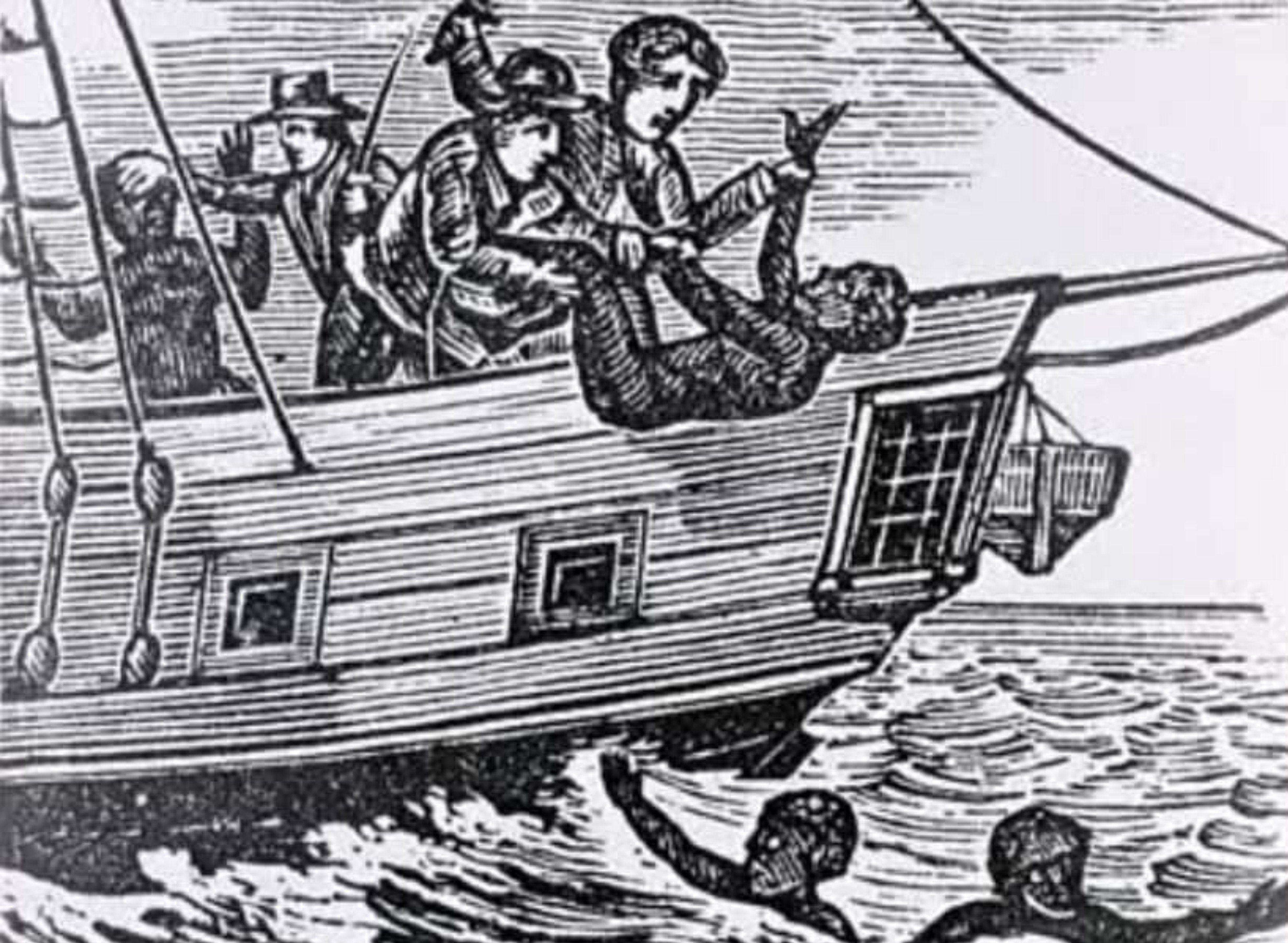
People endured crowding, disease, violence and inadequate food and water. Voyages varied greatly in duration and mortality. Captives resisted through revolt, refusal and other acts of survival; their history cannot be reduced to passive movement as cargo.[3]
Impact & evidence
Embarkation and survival
SlaveVoyages estimates about 12.5 million people embarked and approximately 10.7 million disembarked. The difference indicates enormous mortality during the ocean trade, but does not measure all deaths during capture, inland transport or subsequent enslavement. These are reconstructed estimates from incomplete records.[2]
Aftermath & legacy
Records and recovery
Shipping documents preserve data created by enslavers. Modern databases can reconnect fragments of lives while exposing the limits of those records. Abolition of the transatlantic trade occurred unevenly and did not itself end plantation slavery.[3]
Sources & image credits (3)
- Wikipedia — Middle Passage ↗
- SlaveVoyages: database methodology and estimates ↗
- SlaveVoyages: overview of the transatlantic trade ↗
Printed by James Phillips, George Yard, Lombard Street, London · Public domain Image source ↗