Armenian genocide
The organised destruction of Ottoman Armenian communities through killing, deportation and dispossession.
- When
- 1915–1917; wider violence through 1923
- Where
- Ottoman Empire
The organised destruction of Ottoman Armenian communities through killing, deportation and dispossession. Armenians had lived across the Ottoman Empire for centuries. Discrimination and earlier massacres preceded the First World War, but wartime mobilisation gave the ruling Committee of Union and Progress new means to target communities.
Background
War and a targeted population
Armenians had lived across the Ottoman Empire for centuries. Discrimination and earlier massacres preceded the First World War, but wartime mobilisation gave the ruling Committee of Union and Progress new means to target communities. Authorities portrayed a whole population as a security threat, treating collective identity as grounds for removal rather than establishing individual responsibility.[1]
What happened
- 1915
Arrests and deportation
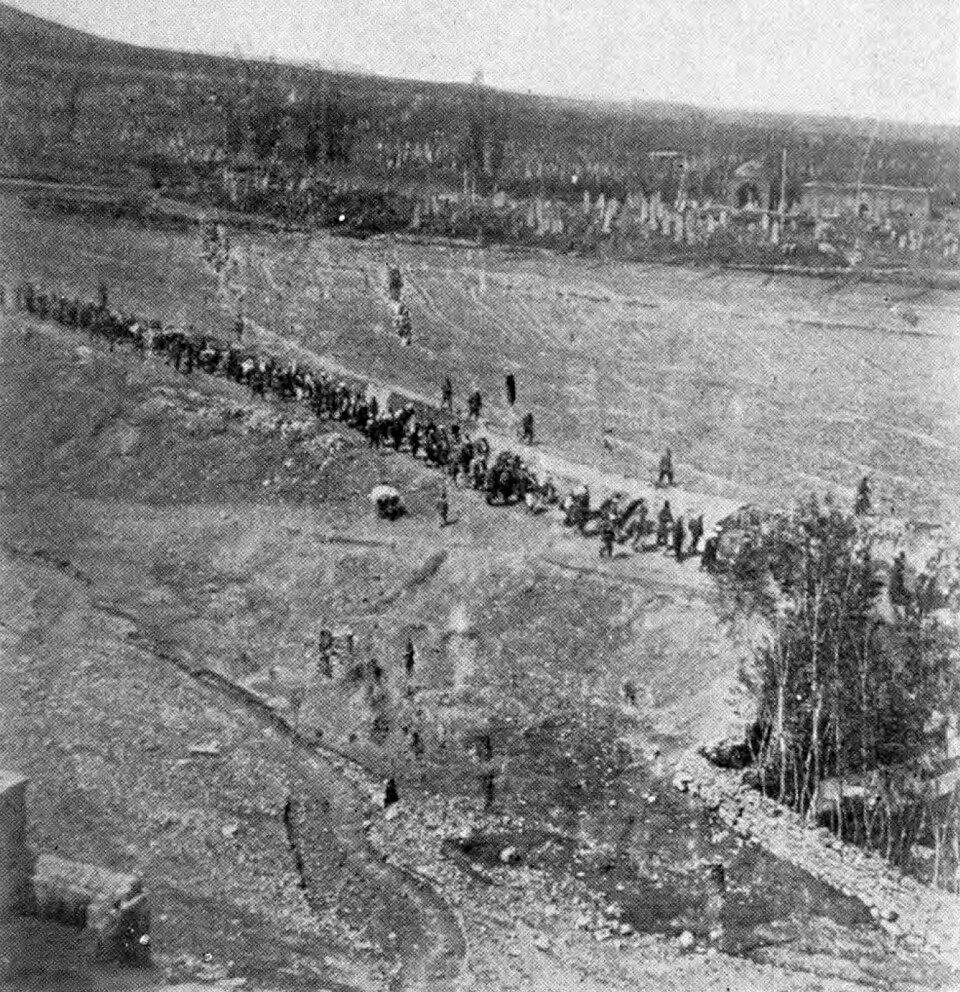
The arrest of Armenian intellectuals and community leaders in Constantinople on 24 April became a major commemorative date. Deportation orders then uprooted communities across Anatolia. Men were frequently separated and killed, while women, children and older people were driven on marches toward the Syrian desert under conditions that exposed them to violence, hunger and disease.[1]
- 1915–1917
Destruction beyond the marches
Massacres and lethal conditions continued in transit and in places of confinement. Property was confiscated, families were broken apart, and some women and children were forcibly incorporated into other households. The attack therefore involved both physical destruction and the dismantling of Armenian communal life.[1]
Impact & evidence
Approximately one million to 1.5 million
Published estimates differ in geographical and chronological scope. The Armenian Genocide Museum-Institute gives approximately 1.5 million deaths for 1915–1923, while other historical reconstructions use a narrower period and lower totals. These estimates describe a mass destruction documented through survivor testimony, diplomatic reporting and administrative records; they are not a complete named register of the dead.[2]
Aftermath & legacy
Survival, diaspora and recognition
Survivors rebuilt lives in dispersed communities, preserving family histories and evidence of lost homes. Recognition and denial became enduring political issues. The historical account must distinguish the central deportation-and-killing campaign from later violence while recognising how both contributed to the destruction and dispersal of Ottoman Armenian society.[1]
Sources & image credits (2)
- Wikipedia — Armenian genocide ↗
- Armenian Genocide Museum-Institute — Historical overview and estimate ↗
Photographer unidentified · Public domain (source record). Resized for display. Image source ↗