Contents
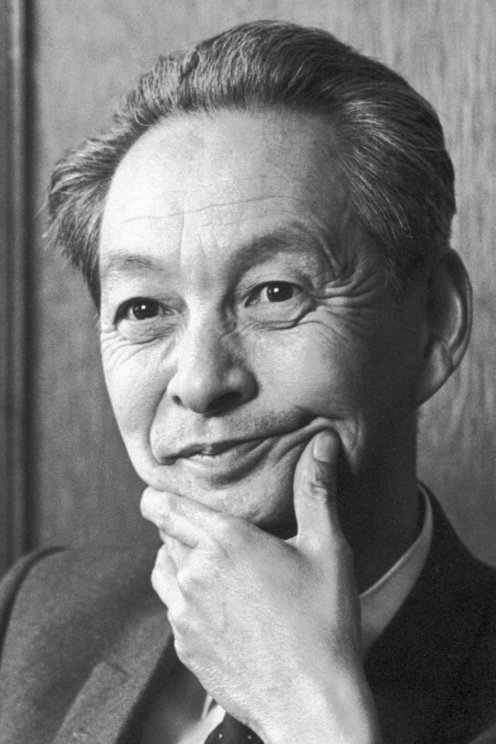
Shin'ichirō Tomonaga
Helping make quantum electrodynamics a workable theory of how light and matter interact.
Relativistic formulation · Renormalization
- Born
- 31 March 1906
- Birthplace
- Tokyo, Japan
- Died
- 8 July 1979
More people
Shin'ichirō Tomonaga
Japanese theoretical physicist who shared the 1965 Nobel Prize with Richard Feynman and Julian Schwinger.
Early life
Academic household
His father was a philosopher; he grew up in an environment shaped by scholarship.
Kyoto studies
Studied physics at Kyoto Imperial University alongside Hideki Yukawa.
Career
- 1931–1939
Research training
Worked at RIKEN and in Werner Heisenberg’s research group in Leipzig.
- 1940s
Quantum field theory
Developed relativistic methods and worked with students to resolve problematic infinities.
- 1950s–1970s
Scientific leadership
Helped build Japanese research institutions and continued writing about physics.
Contributions
Relativistic formulation
Published a new way to describe interacting quantum fields.
Renormalization
Helped obtain finite, testable results from quantum electrodynamics.
Nobel Prize in Physics
Shared the award for foundational work on the theory.
Beyond physics
Institution building
Helped establish the University of Tokyo’s Institute for Nuclear Study.
Writing for readers
His writings included an accessible account of the history of quantum spin.
Sources & photo credit
Biography and references ↗Biography and contributions ↗Photo: Nobel foundation. Public domain · Original image. Cropped and displayed in monochrome.
