Contents
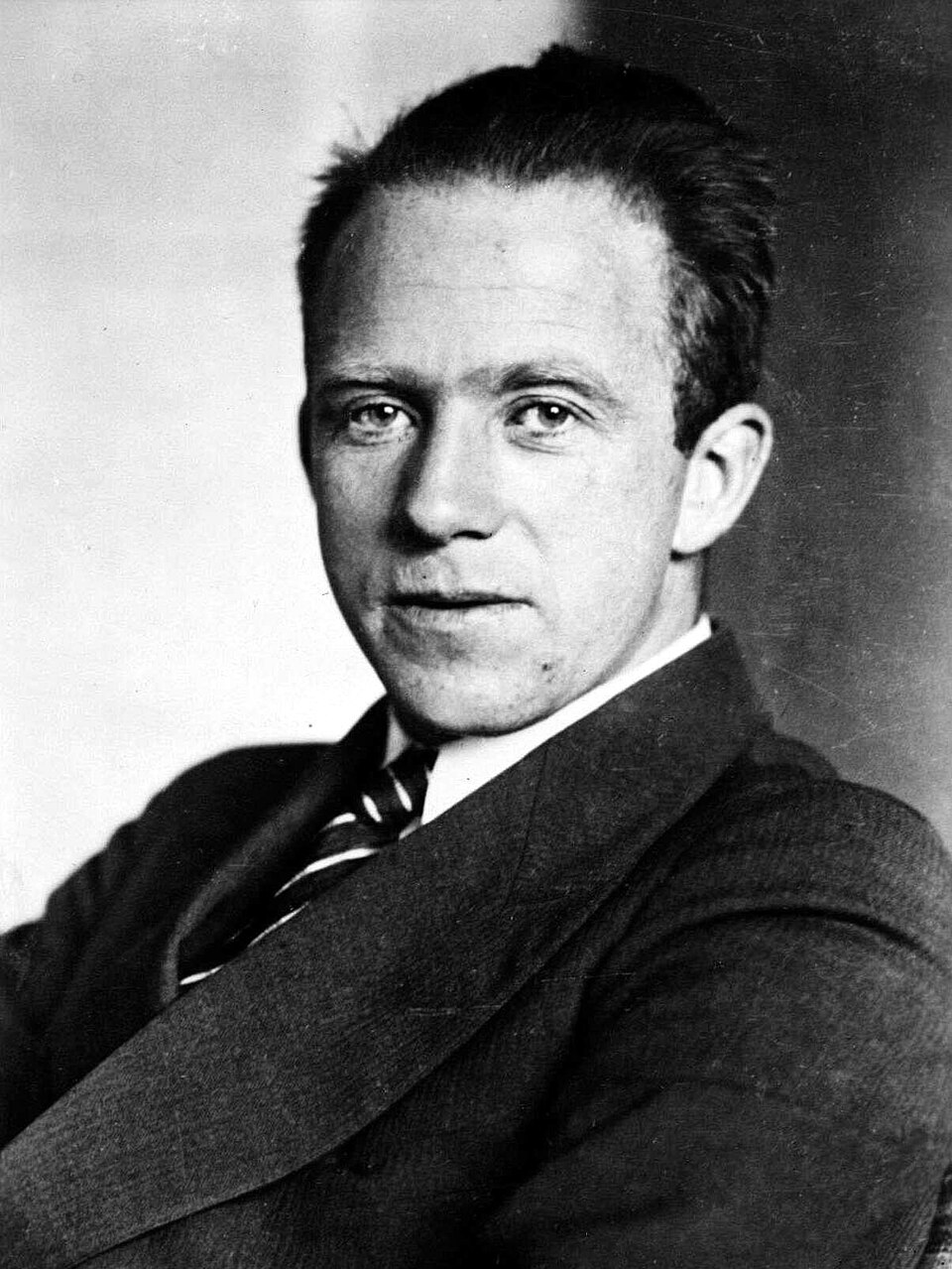
Werner Heisenberg
Formulating matrix mechanics and the uncertainty principle.
Quantum mechanics · Uncertainty principle
- Born
- 5 December 1901
- Birthplace
- Würzburg, Germany
- Died
- 1 February 1976
More people
Werner Heisenberg
Werner Heisenberg was a German physicist who helped establish quantum mechanics. He received the 1932 Nobel Prize in Physics.
Early life
Munich education
Grew up in an academic family and studied physics under Arnold Sommerfeld.
Research centres
Worked with Max Born in Göttingen and Niels Bohr in Copenhagen.
Career
- 1925
Matrix mechanics
Developed a new mathematical approach to quantum behaviour.
- 1927
Leipzig professor
Became a professor and formulated the uncertainty principle.
- 1939–1945
German nuclear programme
Worked on the wartime uranium project under Nazi rule.
- Postwar
Research leadership
Helped rebuild West German physics institutions.
Contributions
Quantum mechanics
Helped replace classical particle descriptions with a new formalism.
Uncertainty principle
Established limits on simultaneous precision for quantities such as position and momentum.
Physics Nobel
Was recognised for creating quantum mechanics.
Beyond physics
Music
Played piano at a high level.
Historical scrutiny
His wartime role and intentions remain subjects of historical analysis.
Sources & photo credit
Life, career and references ↗Nobel Prize: award and biography ↗Photo: Unknown author Unknown author. CC BY-SA 3.0 de · Original image. Cropped and displayed in monochrome.
.jpg)