Contents
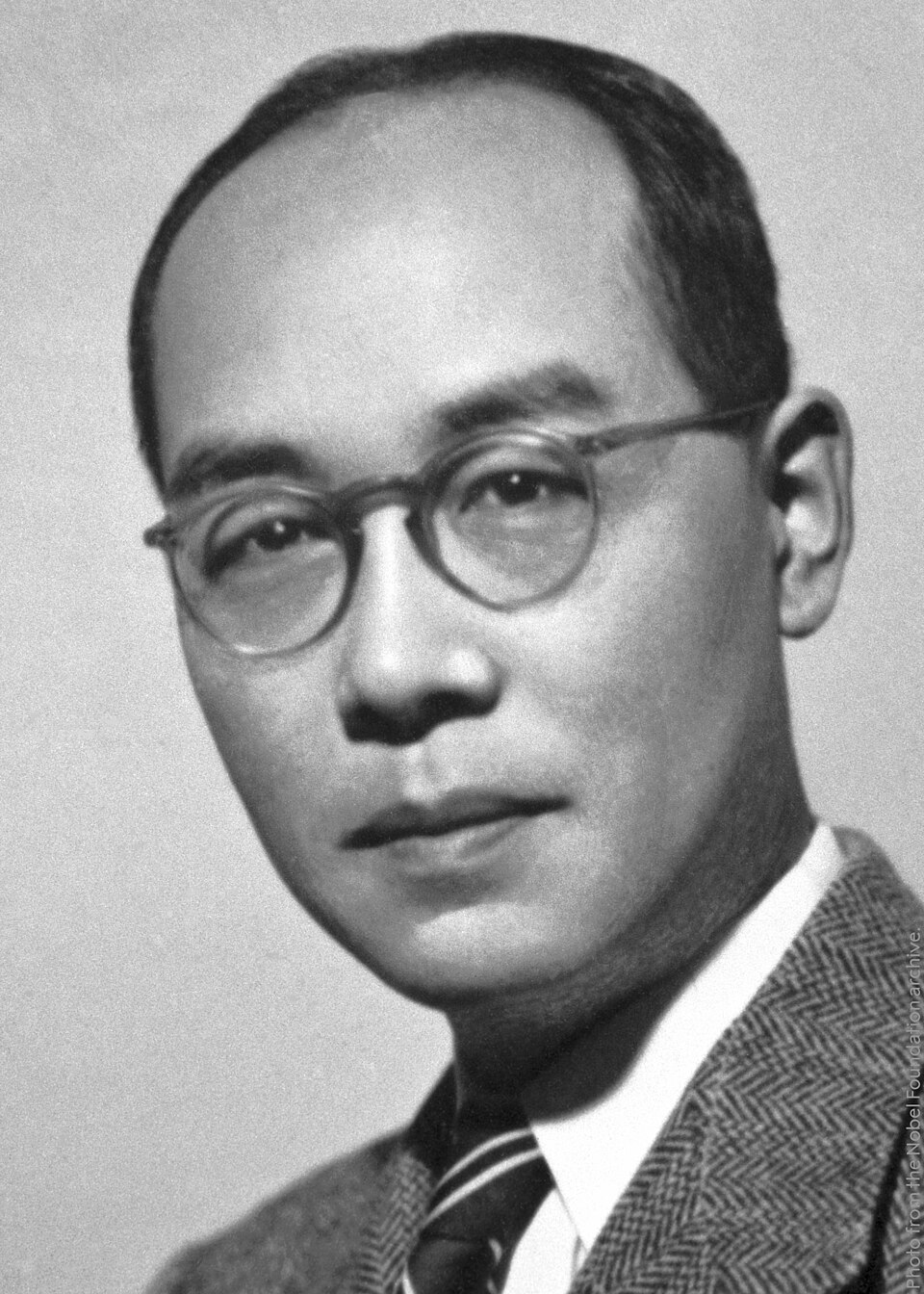
Hideki Yukawa
Predicting a particle that could carry the force binding atomic nuclei, becoming Japan’s first Nobel laureate.
Meson theory · Progress of Theoretical Physics
- Born
- 23 January 1907
- Birthplace
- Tokyo, Japan
- Died
- 8 September 1981
More people
Hideki Yukawa
Hideki Yukawa was a Japanese theoretical physicist who proposed a new explanation for nuclear forces in 1935. His prediction helped launch modern particle physics and brought him the 1949 Nobel Prize in Physics. He also became an advocate for nuclear disarmament.
Early life
Growing up in Kyoto
His family moved from Tokyo to Kyoto, where his father taught geology.
University study
Graduated from Kyoto Imperial University in 1929 and pursued theoretical physics.
Career
- 1933
Osaka appointment
Joined Osaka Imperial University, where he developed his nuclear-force theory.
- 1939
Kyoto professor
Became professor of theoretical physics after earning his doctorate at Osaka.
- 1948–1953
International research
Worked in Princeton and at Columbia before returning to Kyoto.
- 1953
Research institute
Became the first director of Kyoto’s Research Institute for Fundamental Physics.
Contributions
Meson theory
Proposed a massive exchanged particle to explain the short range of nuclear forces.
Progress of Theoretical Physics
Founded a journal for theoretical physics research.
Physics Nobel
Received the prize for his predicted mesons and work on nuclear forces.
Beyond physics
Disarmament
Signed the 1955 Russell–Einstein Manifesto warning about nuclear warfare.
Writing beyond papers
Published books explaining physics as well as autobiographical reflections.
Sources & photo credit
Life, career and references ↗Institutional biography and career record ↗Photo: Nobel Foundation archive. Public domain · Original image. Cropped and displayed in monochrome.
