Contents
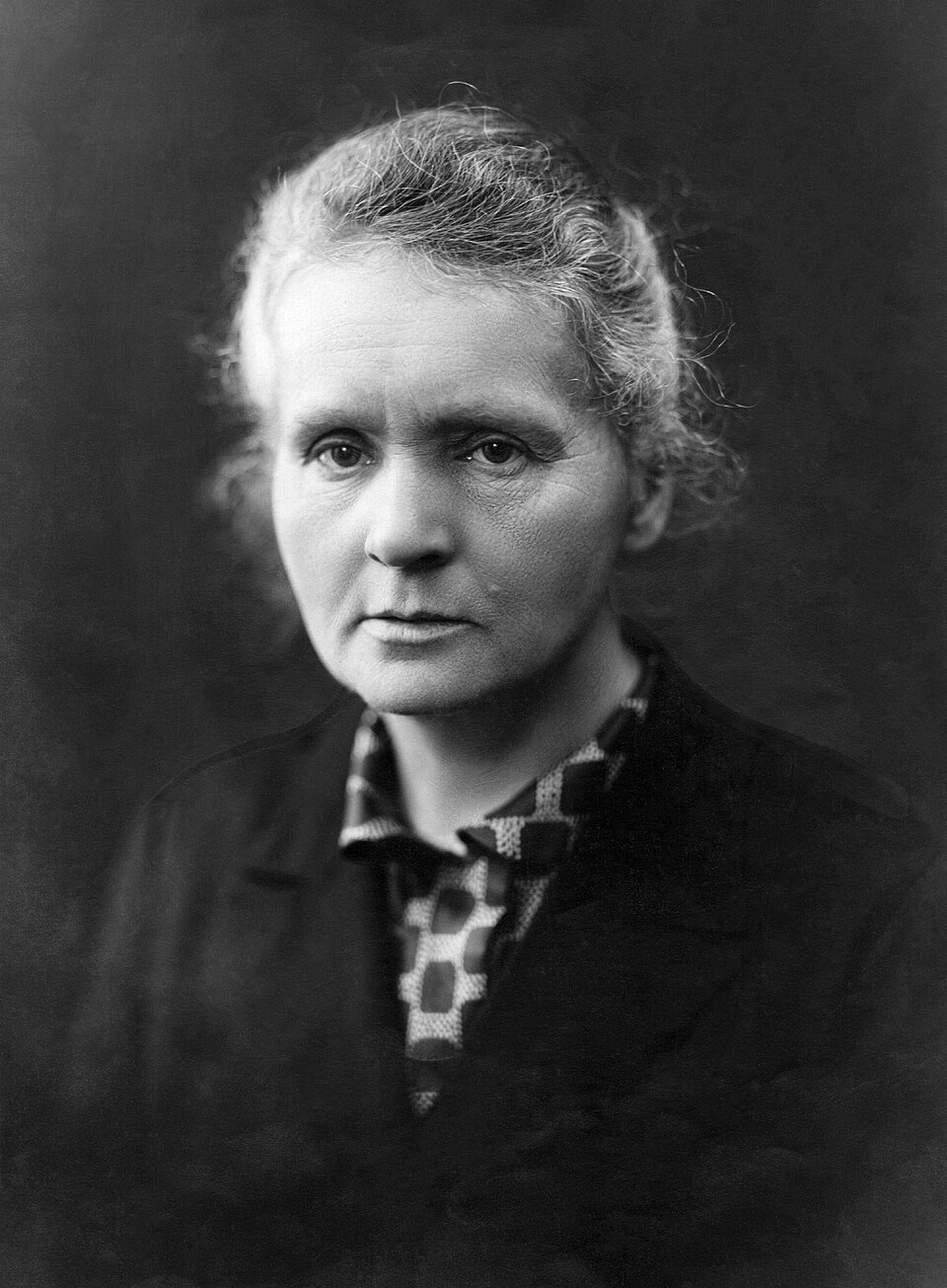
Marie Curie
Discovering polonium and radium.
Radioactivity · Nobel Prizes in Physics and Chemistry
- Born
- 7 November 1867
- Birthplace
- Warsaw, Poland
- Died
- 4 July 1934
More people
Marie Curie
Marie Curie was a physicist and chemist whose research helped establish the study of radioactivity. Working with Pierre Curie, she discovered the elements polonium and radium. Her work was recognised with Nobel Prizes in two different scientific fields.
Early life
Warsaw upbringing
Born Maria Skłodowska into a family of teachers in Warsaw.
Studying in Paris
Moved to Paris in 1891 to study physics and mathematics.
Career
- 1891–1894
University training
Completed physics and mathematics studies in Paris.
- 1897–1903
Doctoral research
Investigated radioactive materials and earned her doctorate.
- 1906
University professor
Succeeded Pierre Curie at the University of Paris after his death.
- 1914
Research leadership
Led the physics and chemistry work of the new Radium Institute.
Contributions
Polonium and radium
With Pierre Curie, identified two previously unknown elements.
Radiation research
Shared the Physics Nobel with Pierre Curie and Henri Becquerel.
Treatise on Radioactivity
Published a major account of the science of radioactivity.
Beyond the lab
A scientific family
Married Pierre Curie in 1895. Their daughters were Irène and Ève.
Wartime service
Helped bring X-ray equipment to wounded soldiers during the First World War, working alongside Irène.
Sources & photo credit
Biography ↗Nobel Prize ↗Life and research ↗Photo: Henri Manuel. Public domain · Original image. Cropped and displayed in monochrome.
