Contents
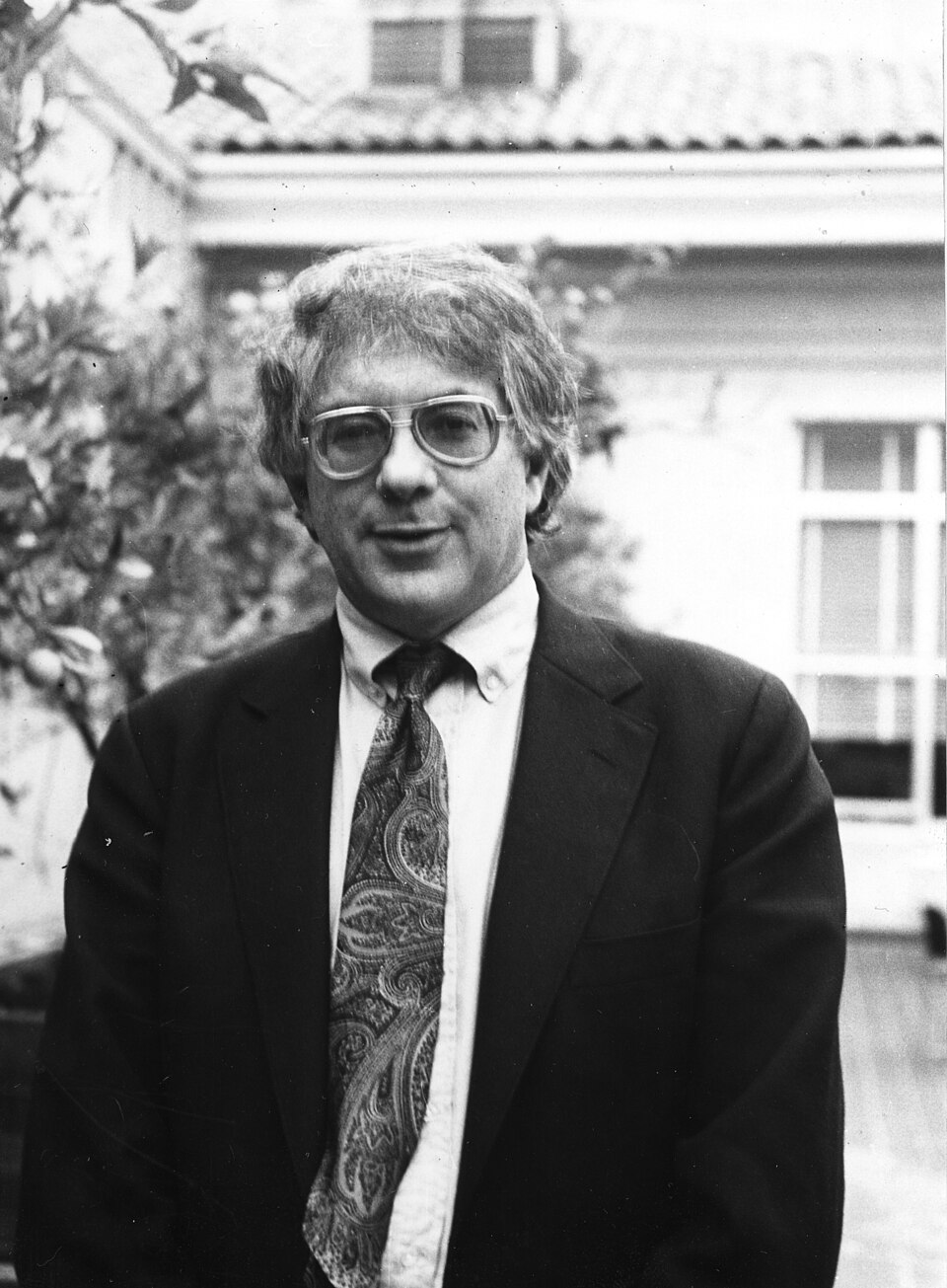
Sheldon Glashow
Helping unify electromagnetism with the weak nuclear force and predict the charm quark.
Electroweak framework · GIM mechanism
- Born
- 5 December 1932
- Birthplace
- New York City, United States
More people
Sheldon Glashow
Sheldon Glashow is an American theoretical physicist who shared the 1979 Nobel Prize in Physics with Abdus Salam and Steven Weinberg for work on electroweak theory.
Early life
Bronx education
Attended the Bronx High School of Science, graduating in the same class as Steven Weinberg in 1950.
Physics training
Graduated from Cornell in 1954 and completed his Harvard doctorate under Julian Schwinger in 1959.
Career
- 1959–1966
Research and early appointments
Worked in Copenhagen and California before joining Harvard.
- 1966–2000
Harvard professor
Built his career in particle theory and became an emeritus professor in 2000.
- 2000s
Boston University
Continued research and teaching at Boston University.
Selected contributions
Electroweak framework
Proposed a mathematical structure that became part of the unified description of two fundamental forces.
GIM mechanism
With John Iliopoulos and Luciano Maiani, showed how a fourth quark could explain otherwise puzzling particle processes.
Grand unification proposal
With Howard Georgi, proposed a model combining three forces; the model was not experimentally established.
Beyond work
Writing for wider audiences
Published books including Interactions and The Charm of Physics.
Science advocacy
Publicly argued for support for basic research and criticised theories he considered insufficiently testable.
Sources & photo credit
Life, career and references ↗Institutional biography and research ↗Photo: AIP Emilio Segrè Visual Archives, Segrè Collection. Attribution · Original image. Cropped and displayed in monochrome.
