Contents
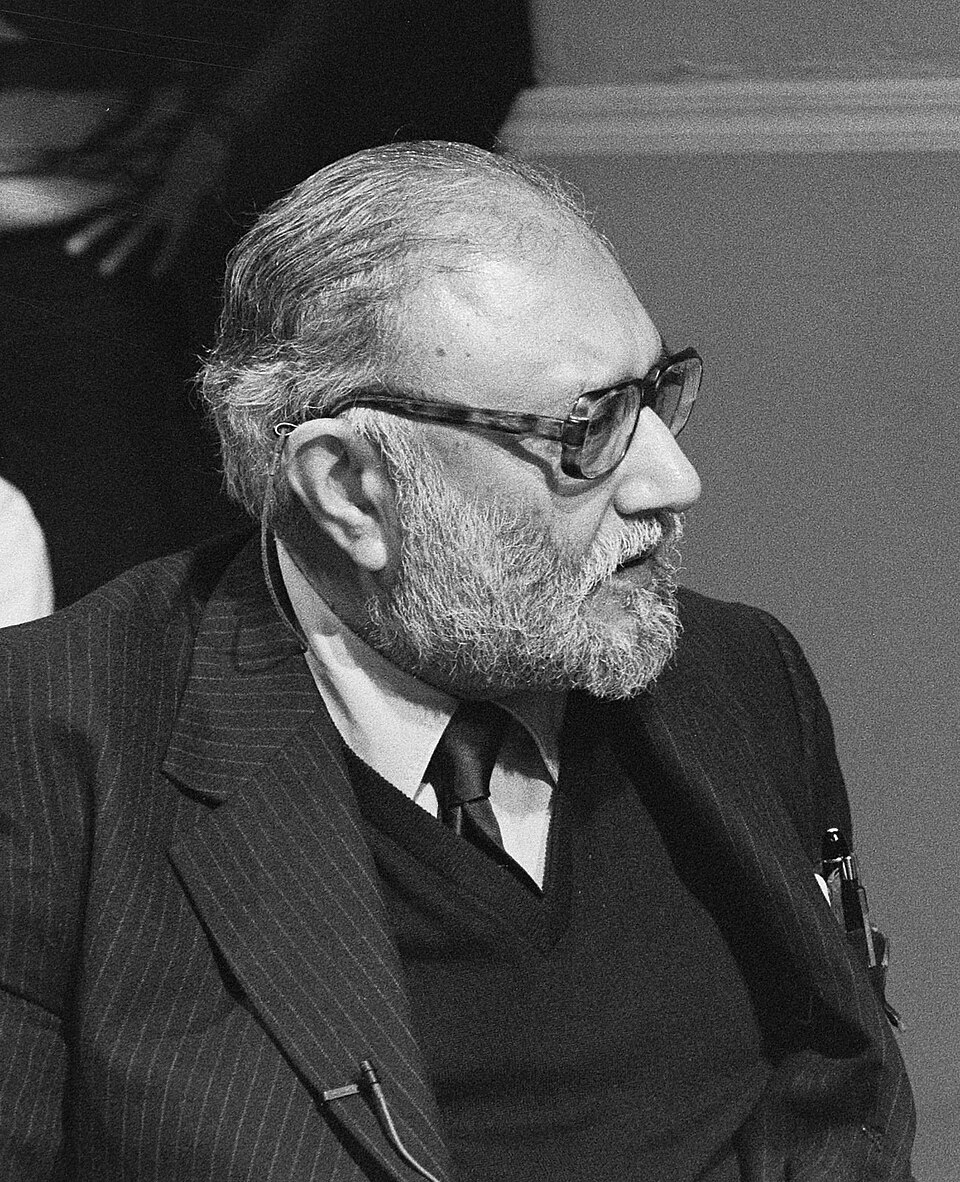
Abdus Salam
Helping develop electroweak theory, which connects two fundamental forces.
International Centre for Theoretical Physics · Electroweak theory
- Born
- 29 January 1926
- Birthplace
- Jhang, present-day Pakistan
- Died
- 21 November 1996
More people
Abdus Salam
A Pakistani theoretical physicist who shared the 1979 Nobel Prize in Physics. He also built institutions intended to make advanced research accessible to scientists from developing countries.
Early life
Punjab upbringing
Grew up in Jhang and studied at Government College, Lahore.
Cambridge
Continued his education in mathematics and physics at Cambridge.
Career
- 1950s
Teaching and research
Worked in Pakistan and Britain before establishing his London research career.
- 1964
ICTP
Founded the International Centre for Theoretical Physics in Trieste.
- 1960s–1970s
Electroweak research
Developed theoretical work connecting electromagnetism and the weak force.
- 1979
Nobel Prize
Shared the physics prize with Sheldon Glashow and Steven Weinberg.
Contributions
International Centre for Theoretical Physics
Created an international research centre with a development mission.
Electroweak theory
Contributed to the framework unifying weak and electromagnetic interactions.
Pati–Salam model
Proposed a unification model with Jogesh Pati.
Beyond physics
Ahmadi identity
Faced religious exclusion in Pakistan as a member of the Ahmadi community.
Scientific opportunity
Worked to support researchers who lacked access to well-funded institutions.
Sources & photo credit
Life, career and references ↗Nobel Prize facts ↗Photo: Molendijk, Bart / Anefo. CC BY-SA 3.0 nl · Original image. Cropped and displayed in monochrome.
