United States Thirteenth Amendment
The Thirteenth Amendment abolished slavery nationwide while retaining an exception for punishment after conviction.
- When
- 1865
- Where
- United States
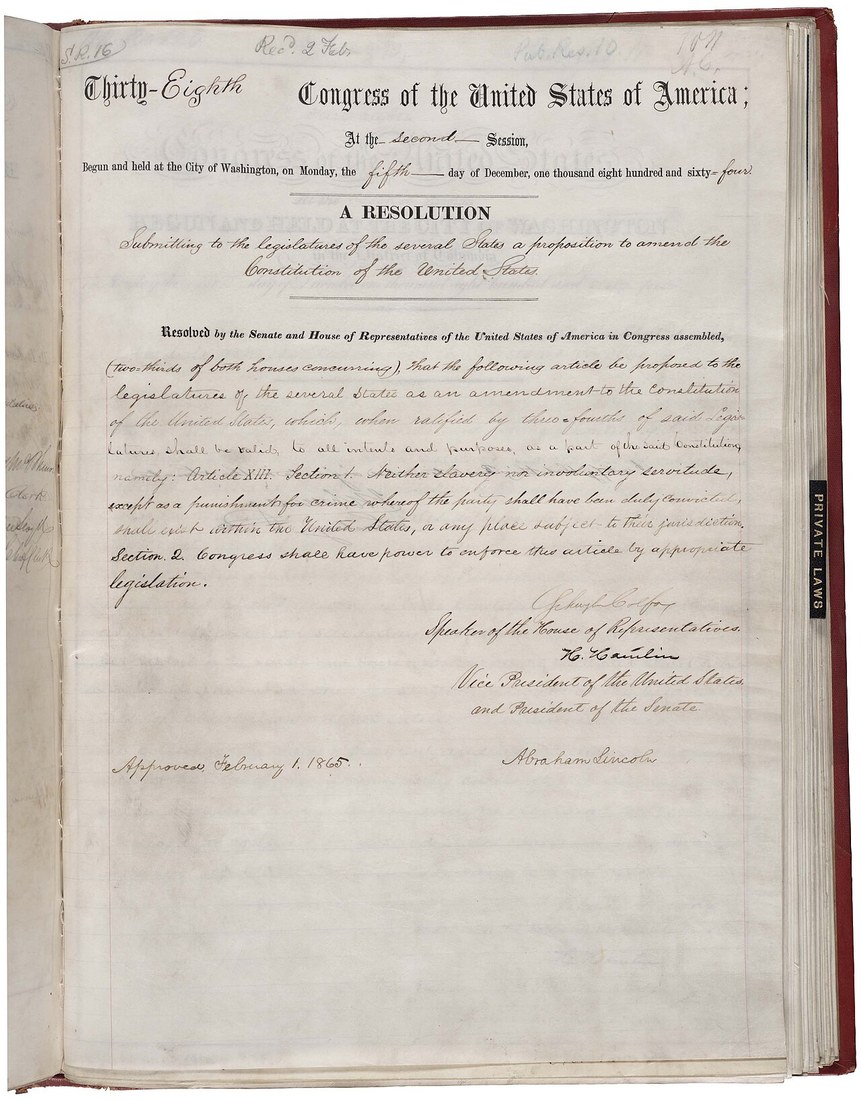
The Thirteenth Amendment abolished slavery nationwide while retaining an exception for punishment after conviction.
Background
Freedom required more than a wartime proclamation
The Emancipation Proclamation applied to designated areas in rebellion, not every place where slavery remained legal. Enslaved people's flight, military service and resistance helped make emancipation central to the Civil War. A constitutional amendment offered a nationwide prohibition that would outlast wartime executive authority.[2]
What happened
- January–December 1865
Congress and ratification
The House approved the amendment on 31 January, after earlier Senate passage. The required number of states ratified it by 6 December, and its adoption was proclaimed later that month. Ratification turned abolition into a constitutional rule rather than leaving it to separate state decisions.[2]
Impact & evidence
Freedom with a punitive loophole
The amendment prohibited slavery and involuntary servitude except as punishment for crime after conviction. It also gave Congress enforcement power. The exception matters to the later history of coerced prison labour; the constitutional end of chattel slavery did not eliminate every institution capable of compelling labour.[2]
Aftermath & legacy
Abolition was a beginning
Freed people sought land, education, family reunification and political rights while confronting violence and discriminatory law. The amendment was a decisive legal transformation, but it did not itself provide equal citizenship, voting rights or economic independence. Reconstruction's subsequent struggles show the distance between abolishing ownership of people and securing substantive freedom.[1]
Sources & image credits (2)
- Wikipedia — Thirteenth Amendment to the United States Constitution ↗
- National Archives: the Thirteenth Amendment and its text ↗
US National Archives Image source ↗