Tōhoku earthquake and tsunami
A megathrust earthquake and tsunami overwhelming coastal communities and triggering the Fukushima nuclear accident.
- When
- 11 March 2011
- Where
- Northeastern Japan
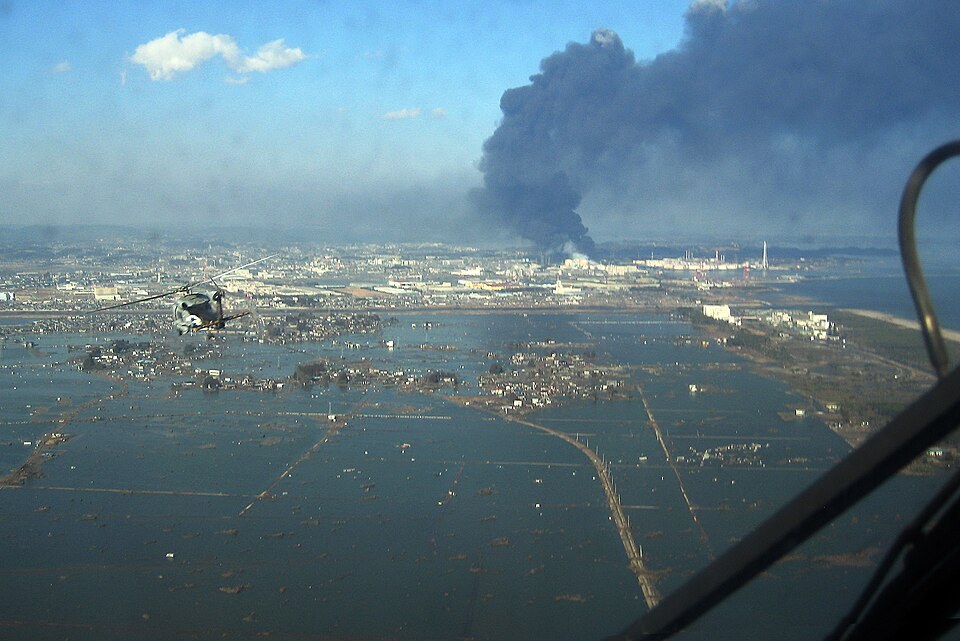
A megathrust earthquake and tsunami overwhelming coastal communities and triggering the Fukushima nuclear accident. Japan had extensive seismic monitoring, building standards and coastal defences. These reduced some risks but could not guarantee safety against every possible tsunami.
Background
A prepared coast facing an extreme event
Japan had extensive seismic monitoring, building standards and coastal defences. These reduced some risks but could not guarantee safety against every possible tsunami. Low coastal settlements and complex bays exposed communities to waves whose heights and inland reach varied sharply from place to place.[1]
What happened
- 11 March 2011
Earthquake and evacuation
A magnitude 9-class earthquake struck offshore. Warnings and strong shaking prompted evacuation, but the tsunami overtopped or damaged defences in many places. Some people could not reach high ground, while assumptions based on smaller expected waves proved dangerously inadequate.[1]
- The following hours
Cascading failures
Water destroyed housing, transport links and public facilities. At Fukushima Daiichi, flooding contributed to loss of power and cooling, leading to reactor meltdowns. The tsunami disaster and the nuclear emergency were connected but involved different mechanisms and consequences; radiation was not the cause of the mass drowning deaths.[1]
Impact & evidence
Count categories matter
Japan's Reconstruction Agency reports roughly 19,800 deaths including recognised disaster-related deaths, and about 2,550 missing in its March 2025 accounting. Later deaths associated with displacement and hardship are distinct from immediate deaths. Combining these categories without explanation can obscure what the figures measure.[2]
Aftermath & legacy
Reconstruction and continuing displacement
Rebuilding involved higher seawalls, relocation and changes to hazard maps. Some communities faced population loss and difficult decisions about return. The disaster underlined the need to plan for failures beyond a single protective structure and to support people long after emergency rescue ends.[1]
Sources & image credits (3)
- Wikipedia — 2011 Tōhoku earthquake and tsunami ↗
- Japan Reconstruction Agency — Great East Japan Earthquake ↗
- Japan Reconstruction Agency — Overview and casualty definitions ↗
U.S. Navy photo · Public domain (source record). Resized for display. Image source ↗