Lisbon earthquake, tsunami and fires
A sequence of shaking, waves and fires that devastated Lisbon and changed debates about disaster and reconstruction.
- When
- 1 November 1755
- Where
- Portugal; wider Atlantic coasts
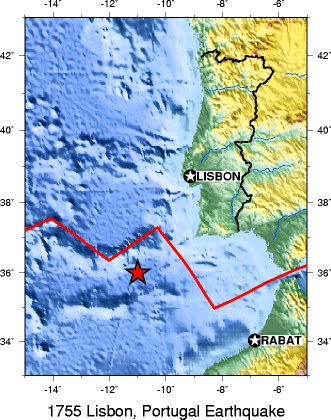
A sequence of shaking, waves and fires that devastated Lisbon and changed debates about disaster and reconstruction. Lisbon was a densely built imperial trading capital. On All Saints' Day, many people gathered in churches when a powerful offshore earthquake struck.
Background
A major port on a feast day
Lisbon was a densely built imperial trading capital. On All Saints' Day, many people gathered in churches when a powerful offshore earthquake struck. There were no instruments capable of recording its magnitude; modern figures are reconstructions from damage and other historical evidence.[1]
What happened
- 1 November 1755
Three hazards combine
Shaking brought down buildings and drove survivors into open spaces, including the waterfront. Tsunami waves then struck the harbour, while fires spread through damaged neighbourhoods. These overlapping hazards made places of apparent refuge dangerous and complicated efforts to rescue people and contain destruction.[1]
- Following months
Relief and reconstruction
Authorities organised emergency measures and planned the rebuilding of central Lisbon. The Baixa reconstruction introduced a more regular street plan and structural measures intended to resist earthquakes. Reports collected from different places also helped create a systematic record of the event's effects.[1]
Impact & evidence
Tens of thousands died
NOAA describes approximately 30,000 earthquake deaths, noting estimates as high as twice that figure, with further losses from the tsunami. Historical totals vary by location and by whether they combine earthquake, tsunami and fire deaths. Damage extended into North Africa; a precise modern casualty count cannot be recovered from the records.[2]
Aftermath & legacy
A disaster with intellectual consequences
The catastrophe entered European arguments about providence, suffering and the natural world. Its practical legacy also mattered: coordinated rebuilding and collection of observations contributed to later disaster study. These changes did not diminish the loss experienced by survivors or make the reconstruction socially equal.[1]
Sources & image credits (3)
- Wikipedia — 1755 Lisbon earthquake ↗
- NOAA — Lisbon earthquake and tsunami ↗
- USGS — Earthquake science timeline ↗
USGS · Public domain (source record). Resized for display. Image source ↗