The SL-1 reactor accident
A sudden power excursion in an experimental reactor that killed its three operators.
- When
- 3 January 1961
- Where
- Idaho, United States
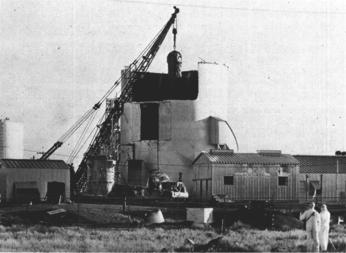
An accident at the SL-1 experimental reactor killed three military operators on 3 January 1961. Excessive withdrawal of the central control rod caused a rapid power increase and destructive steam pressure. Recovery teams then faced a damaged radioactive facility whose condition was initially uncertain.
Background
An experimental military reactor
SL-1 was a small experimental reactor intended for military applications. After a shutdown for maintenance, workers were preparing to reconnect control-rod mechanisms. The design made movement of the central rod especially consequential, placing great importance on a manual task performed above the core.[1]
What happened
- 3 January 1961
A fatal power excursion
The central control rod was lifted too far. The reactor’s power rose abruptly and rapid steam generation caused a violent mechanical event. All three operators died. The technical explanation does not establish a motive for the rod movement, and speculation about intent should not be treated as fact.[1]
- January 1961
Recovery under hazardous conditions
Responders had to recover the men and assess whether the damaged reactor was safely shut down. The initial recovery report records uncertainty about the core, control rods and remaining water. Radiation and the damaged structure complicated access.[2]
Impact & evidence
Three fatalities
The recovery report identifies three military personnel fatally injured in the accident. This direct toll is distinct from an estimate of later population health effects. The event was an experimental-reactor accident, not a commercial power-station meltdown.[2]
Aftermath & legacy
Design and maintenance were inseparable
The accident demonstrated the danger of a configuration in which one manual movement could produce a catastrophic change. Its history belongs in the development of reactor safety, including design margins, maintenance procedures and planning for emergency recovery.[1]
Sources & image credits (2)
US Atomic Energy Commission; Public domain Image source ↗