The Chernobyl disaster
A reactor explosion that spread radioactive contamination across borders and displaced communities.
- When
- 26 April 1986 and its aftermath
- Where
- Ukrainian SSR, Soviet Union; present-day Ukraine
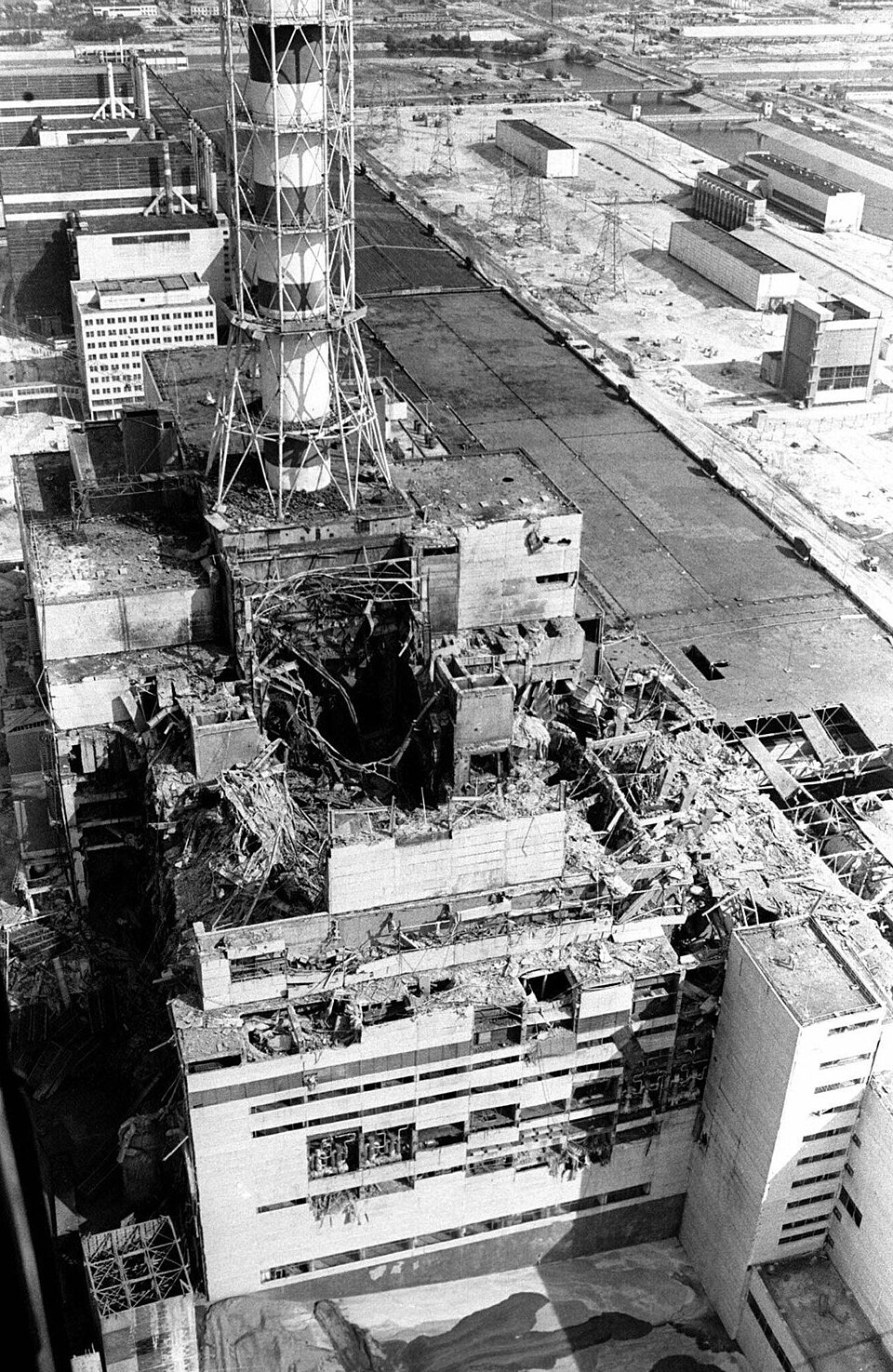
Reactor 4 at Chernobyl was destroyed during a test on 26 April 1986. Reactor design faults, unsafe conditions and failures across the Soviet nuclear safety system combined in the disaster. Workers faced lethal exposure, residents were evacuated, and radioactive material spread across parts of Europe.
Background
A vulnerable reactor and a failed safety system
The RBMK reactor had characteristics that could make power rise rapidly under particular conditions. Its control-rod design also created a dangerous response during shutdown. The IAEA’s later reassessment broadened responsibility beyond the operators to design, regulation and the communication of known hazards. Explaining the accident solely as individual carelessness misses these failures.[1]
What happened
- 26 April 1986
A test ends in destruction
During a turbine rundown test, the reactor became unstable. A rapid power increase and explosions destroyed the core and building. The exposed fuel and fire released radioactive material into the environment.[1]
- 1986 onward
Evacuation and containment
About 115,000 people were evacuated in 1986, with roughly 220,000 more relocated in later years, according to UNSCEAR. Emergency workers fought fires, cleared contamination and enclosed the damaged reactor. Their exposures varied enormously depending on their tasks and timing.[2]
Impact & evidence
Early deaths and acute radiation sickness
UNSCEAR records 134 cases of acute radiation sickness among workers, of whom 28 died within three months, alongside two initial deaths. These early deaths do not constitute a complete estimate of the disaster’s lifetime mortality.[2]
Cancer and uncertainty
A substantial increase in thyroid cancer occurred among people exposed as children or adolescents, particularly through radioactive iodine. Cancer cases are not the same as cancer deaths. Estimating additional deaths over decades requires epidemiology and modelling; there is no single verified register of every death attributable to the accident.[2]
Aftermath & legacy
Lessons reached beyond one plant
The reassessment exposed failures in how risks were understood and communicated throughout the nuclear system. Changes to reactors and operating practices addressed specific faults, while the ruined unit required continuing containment. The consequences also included the permanent disruption of communities and the loss of confidence in official information.[1]
Sources & image credits (2)
IAEA Imagebank; CC BY-SA 2.0 Image source ↗