The Kyshtym disaster
A waste-storage explosion that contaminated a large area of the southern Urals.
- When
- 29 September 1957
- Where
- Mayak complex, Soviet Union; present-day Russia
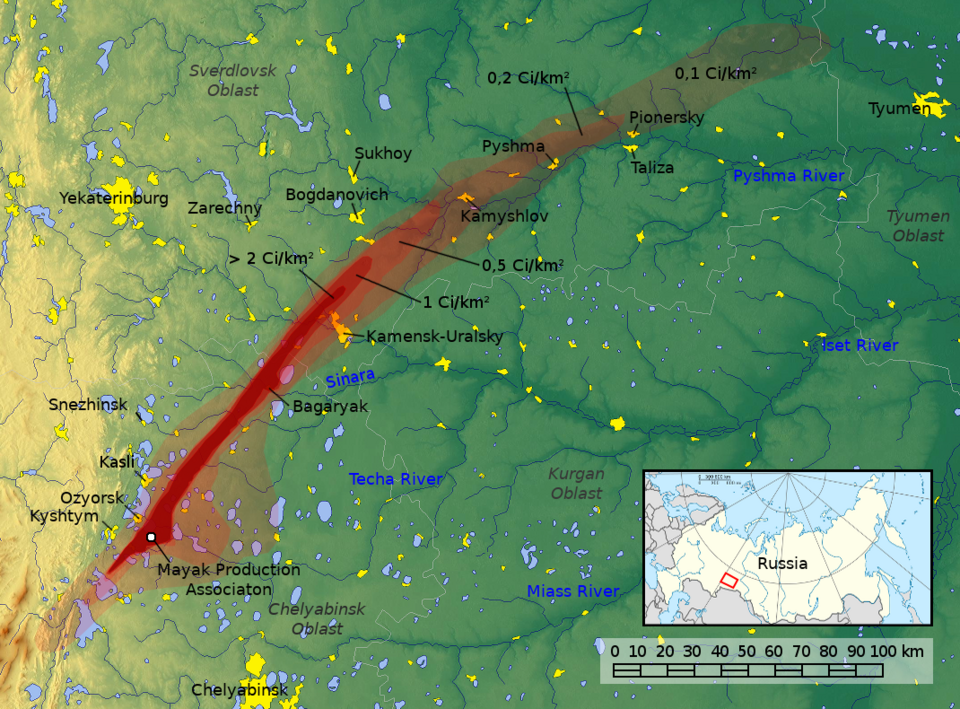
A tank containing highly radioactive waste exploded at the Mayak nuclear complex in 1957. Fallout spread through the surrounding region, creating what became known as the East Urals Radioactive Trace. The disaster involved waste from weapons production, rather than an operating power reactor.
Background
Weapons production left dangerous waste
Mayak formed part of the Soviet nuclear weapons programme. Separating material for weapons also produced highly radioactive waste that continued generating heat. Storage required dependable cooling and monitoring. The disaster illustrates how the danger from nuclear production can persist after material leaves a reactor.[1]
What happened
- 29 September 1957
A storage tank explodes
Loss of adequate cooling allowed the waste to overheat, leading to a chemical explosion. Radioactive material was dispersed over a broad area. This was not the detonation of an atomic weapon, although the contamination came from material associated with nuclear production.[1]
- 1957 onward
Communities are removed
Evacuations took place in stages rather than as one immediate movement of everyone affected. IAEA historical material describes an initial evacuation of about 600 people and an eventual total around 10,000. Contaminated land and settlements required restrictions and remediation.[2]
Impact & evidence
Exposure is not a death count
The number evacuated describes people removed from their homes; it is not a mortality figure. The sources do not establish a single verified lifetime death toll for this accident. Long-term health assessments must also distinguish exposure from the explosion from other releases associated with Mayak.[2]
Aftermath & legacy
A lasting contaminated landscape
The East Urals Radioactive Trace became a long-term environmental problem. Management had to address contaminated ground and the consequences for communities, not simply repair the original tank. The history broadens nuclear safety beyond power stations to waste storage and the weapons-production system.[1]
Sources & image credits (2)
- IAEA — Environmental consequences of emergencies ↗
- IAEA — One decade after Chernobyl, comparative accident evidence ↗
Goran tek-en (following request by Kintetsubuffalo), Original Map: Jan Rieke, maps-for-free.com; Minimap: NordNordWest, Historicair, Bourrichon, Insider, Kneiphof; CC BY-SA 4.0 Image source ↗