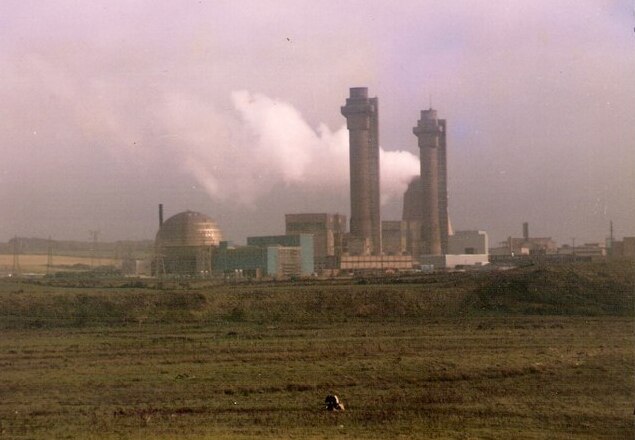
Nuclear testing at Semipalatinsk
Four decades of Soviet nuclear testing and its consequences for surrounding communities.
- When
- 1949–1989; site closed in 1991
- Where
- Kazakh SSR, Soviet Union; present-day Kazakhstan
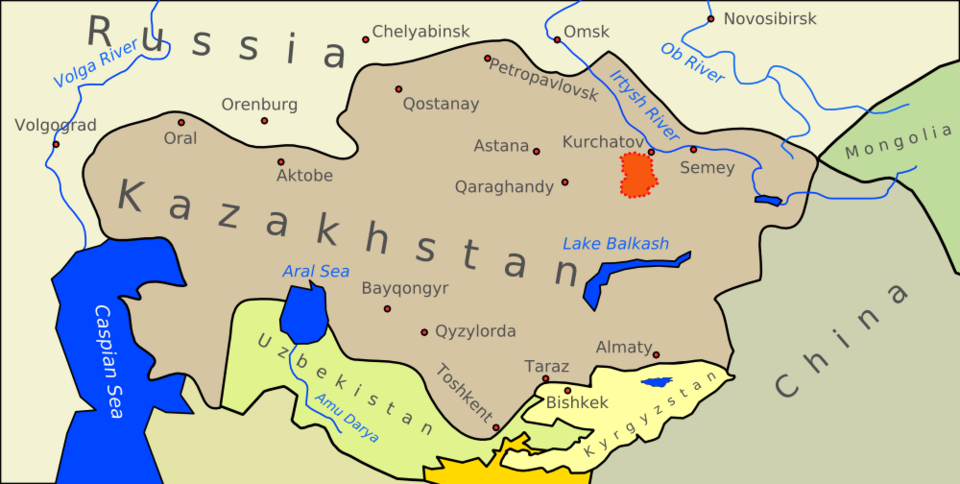
The Soviet Union conducted 456 nuclear tests at Semipalatinsk between 1949 and 1989. Nearby communities experienced fallout exposure whose long-term effects became a major subject of research and public concern. The site’s closure in 1991 ended testing, but did not end the environmental and health legacy.
Background
A testing ground beside communities
Semipalatinsk was part of the Soviet weapons programme, not an empty landscape without inhabitants. The surrounding population included people whose everyday lives continued during decades of tests. Understanding their exposure requires reconstructing where fallout travelled and how people encountered it.[1]
What happened
- 29 August 1949
The first Soviet nuclear test
The first Soviet atomic explosion took place at the site. It began a programme that would continue for forty years, encompassing different forms of nuclear testing.[3]
- 1949–1989
Repeated tests
The total of 456 tests describes a programme, rather than one accident. Health researchers examine the resulting exposures across populations and periods, with particular attention to the difficulty of reconstructing past doses.[1]
- 29 August 1991
Closure
Kazakhstan closed the testing site. Closure was a decisive political act, while securing the former testing area and addressing its legacy remained separate tasks.[3]
Impact & evidence
Why a single death toll is inadequate
Research programmes investigate mortality, cancer and radiation exposure among residents. Establishing a causal contribution requires comparison and dose reconstruction; the population living near a site cannot simply be counted as people killed by testing. Uncertainty over a total does not erase the documented exposure or the need for care.[1]
Aftermath & legacy
From secrecy to public scrutiny
The CTBTO’s history describes the restricted information surrounding the testing period. Later research and public campaigning brought community consequences into wider view. Semipalatinsk became an important reference point in the international effort to end nuclear testing.[2]
Sources & image credits (3)
- IARC — Semipalatinsk health research ↗
- CTBTO — Twentieth anniversary of closure ↗
- Kazakhstan government — Site chronology ↗
Wikimedia Commons contributor Wfm; CC BY-SA 3.0 Image source ↗