Saint Elizabeth's flood in the Netherlands
The Saint Elizabeth's flood devastated parts of the Dutch delta and became surrounded by enduring stories that exceed the surviving evidence.
- When
- November 1421
- Where
- Holland and Zeeland, present-day Netherlands
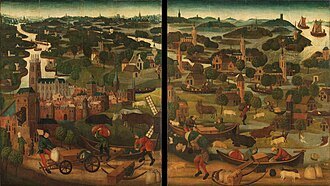
The Saint Elizabeth's flood devastated parts of the Dutch delta and became surrounded by enduring stories that exceed the surviving evidence.
Background
A defended but vulnerable delta
Communities depended on dikes and drainage in a landscape shaped by rivers and the sea. Political and economic pressures affected maintenance. The flood's consequences developed within this managed landscape rather than an untouched natural setting.[1]
What happened
- November 1421
Flooding and lasting disruption
A storm flood breached defences and inundated parts of the Grote Hollandse Waard. Subsequent flooding and unsuccessful recovery contributed to longer-term landscape change; the later Biesbosch should not be imagined as appearing fully formed in a single night.[1]
Impact & evidence
Legend is not a census
Later stories describe enormous losses of life. Modern reassessments question those figures and the evidence behind them. No secure precise death toll is established here; repeating a dramatic traditional number would give it unwarranted certainty.[2]
Aftermath & legacy
Memory and historical reconstruction
Paintings and legends helped preserve the flood in public memory. They are evidence of remembrance, not straightforward eyewitness records of every detail. Archaeology, hydraulic analysis and contemporary documentation offer different ways of reconstructing what happened.[2]
Sources & image credits (2)
- Wikipedia — St. Elizabeth's flood (1421) ↗
- Delft University of Technology: facts and fiction about the flood ↗
Master of the St Elizabeth Panels Image source ↗