Central China floods
Flooding followed by disease and hunger that killed an estimated two million people across central China.
- When
- 1931
- Where
- Yangtze and Huai river regions, China
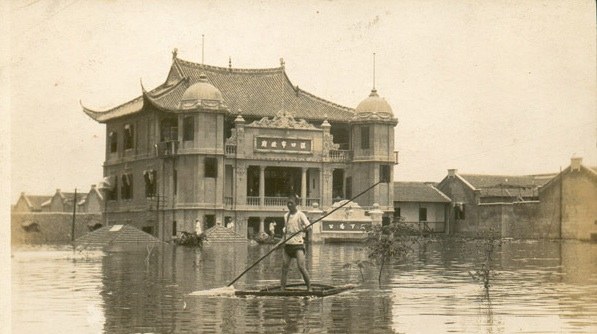
Flooding followed by disease and hunger that killed an estimated two million people across central China. Communities depended on rivers, lakes and embankments for farming and transport. Heavy precipitation and high water met a landscape already shaped by settlement, land use and weakened infrastructure.
Background
Waterways and vulnerable livelihoods
Communities depended on rivers, lakes and embankments for farming and transport. Heavy precipitation and high water met a landscape already shaped by settlement, land use and weakened infrastructure. The resulting disaster cannot be explained by rainfall alone: poverty and the condition of water-control systems shaped exposure.[1]
What happened
- Summer 1931
Rivers and lakes overflow
Floods spread through the Yangtze and Huai regions, inundating cities, villages and farmland. Dike failures and prolonged high water displaced enormous numbers of people. Households lost crops, stored food, livestock and shelter, turning the flood into a sustained emergency.[1]
- Following months
Disease and hunger extend the losses
People crowded onto limited dry ground or moved in search of assistance. Contaminated water, poor nutrition and disrupted livelihoods created mortality beyond drowning. Relief involved government, local organisations and international assistance, but did not reach all affected communities equally.[1]
Impact & evidence
Two million includes later deaths
Historian Chris Courtney's account describes as many as two million deaths and around 52 million people affected. The death estimate includes disease and hunger as well as direct flood deaths. Larger popular totals circulate, but should not replace a sourced estimate with clear definitions.[2]
Aftermath & legacy
Disaster as a social history
The floods altered lives long after the water receded. Recovery depended on access to food, credit, land and functioning institutions. Studying these conditions explains why people exposed to the same water levels experienced different outcomes, and why a natural-hazard label alone is inadequate.[1]
Sources & image credits (3)
- Wikipedia — 1931 China floods ↗
- Chris Courtney — Central China flood, 1931 ↗
- Journal of Interdisciplinary History — The Nature of Disaster in China ↗
Historical photograph reproduced by the Wuhan school alumni source; original photographer unidentified. · Public domain (source record). Resized for display. Image source ↗