Rajputana famine
Drought, livestock losses and inadequate relief across a fragmented political region.
- When
- 1868–1870
- Where
- Rajputana, Ajmer and neighbouring regions, India
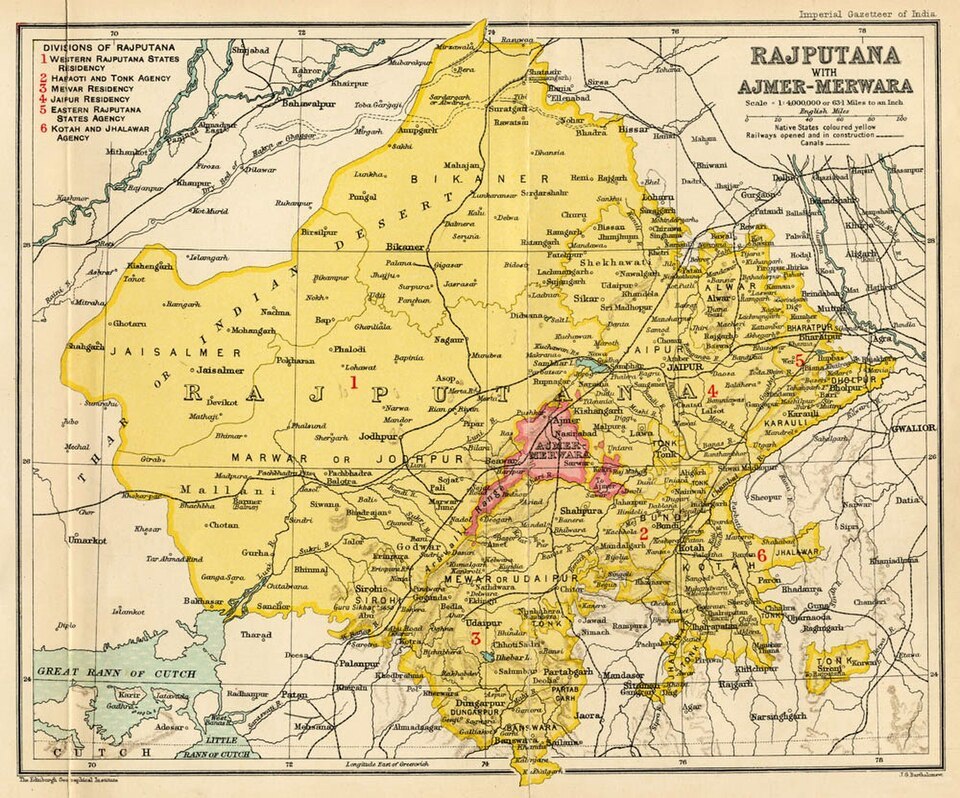
Drought, livestock losses and inadequate relief across a fragmented political region.
Background
Different administrations, shared exposure
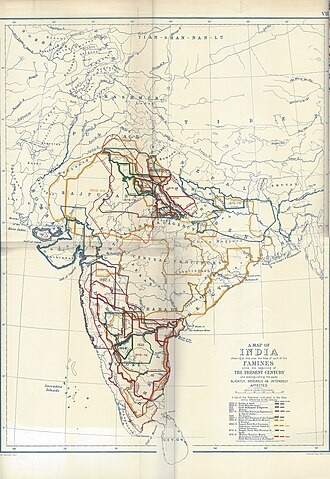
The crisis affected princely states in Rajputana and British-administered territory such as Ajmer. Rain failure damaged harvests and pasture, while the strength of local relief and transport systems varied.[1]
What happened
- 1868–1869
Losses accumulated
Food shortages, migration and cattle deaths weakened households’ ability to survive. Later rains did not immediately restore seed, animals or income. Disease compounded the effects of hunger.[1]
- 1868–1870
Migration strained neighbouring districts
People and cattle moved in search of food, fodder and work. Scarcity therefore crossed the boundaries separating princely states from British-administered districts. Rainfall recovery did not immediately replace animals, seed or household assets, while disease increased mortality among already weakened migrants.[1]
Impact & evidence
A historical estimate of 1.25 million deaths
The contemporary historical report cited here estimated one and a quarter million deaths from starvation or disease across the famine-affected tract. Later summaries often use more than 1.5 million for Rajputana. Differences in territory and accounting prevent treating either figure as a complete, precisely reconciled census.[2]
Aftermath & legacy
Relief and the record it left
Official reports document relief decisions but also reflect the administrators who produced them. Reading their financial and mortality tables alongside local histories is necessary to understand both government action and experiences that those records omitted.[2]
Sources & image credits (2)
The original uploader was Tom Radulovich at English Wikipedia . · Public domain Image source ↗