Partition and mass displacement in South Asia
The displacement and communal violence accompanying the end of British rule.
- When
- 1947 and aftermath
- Where
- India and Pakistan
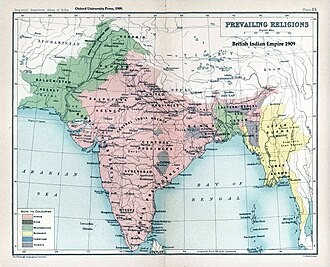
The partition of British India created India and Pakistan amid enormous population movements and violence. Independence brought political freedom from British rule while hurried boundary-making and communal conflict devastated many communities.
Background
The end of colonial rule
Negotiations over independence confronted competing visions of the state. Dividing provinces created urgent questions about borders, minorities and security.[1]
Borders divided provinces and everyday life
The creation of India and Pakistan divided Punjab and Bengal as well as the institutions of British India. People’s homes, farms, religious communities and trading networks did not align neatly with the new lines. Fear of becoming a vulnerable minority, attacks and retaliation drove displacement in both directions.[1]
What happened
Impact & evidence
Boundaries and testimony
Administrative records and accounts of refugees preserve different aspects of the upheaval.[1]
Millions displaced; deaths remain uncertain
The National Army Museum estimates that ten million people became refugees and up to a million were killed in massacres. These are broad historical estimates, not a complete register of the dead. Refugee totals measure displacement and must not be added to mortality figures. Families also endured separation and the loss of homes and livelihoods.[1]
Aftermath & legacy
Lives across borders
Families lost homes and connections, while disputed territories shaped future conflicts. Experiences varied by region and community; no single journey represents the entire history of Partition.[1]
Sources & image credits (1)
John George Bartholomew; Public domain; via Wikimedia Commons. Image source ↗