Palomares nuclear weapons accident
An aerial refuelling collision dropped four nuclear weapons and contaminated land with radioactive material.
- When
- 17 January 1966 and aftermath
- Where
- Palomares, Spain, and nearby Mediterranean Sea
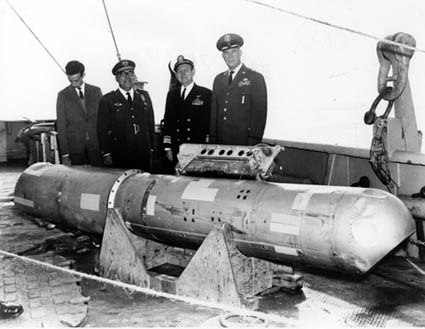
An aerial refuelling collision dropped four nuclear weapons and contaminated land with radioactive material.
Background
Airborne nuclear alert
A US B-52 carrying nuclear weapons collided with a KC-135 tanker during refuelling over southern Spain. The accident arose from military operations in peacetime, exposing people outside the armed forces to their risks.[2]
What happened
- 17 January 1966
Aircraft and weapons fell
Seven aircrew died and four survived. Four weapons fell, three on land and one into the sea. No nuclear detonation occurred. That distinction does not make the accident harmless.[2]
Impact & evidence
Conventional explosives dispersed radioactive material
Explosives in two weapons scattered plutonium-containing material across land near Palomares. Recovery and cleanup involved removing contaminated material and finding the weapon offshore. The immediate aircrew deaths and potential long-term radiation effects are different kinds of consequence.[3]
Aftermath & legacy
A legacy beyond the recovery operation
Monitoring of residents and debates over exposure and remediation continued for decades. Official dose assessments and medical surveillance are evidence to examine, not grounds to invent a radiation death toll. The case illustrates how a weapons accident can leave environmental and diplomatic obligations long after the aircraft wreckage is removed.[4]
Long-term radiological surveillance
CIEMAT’s programme documented continuing environmental and health surveillance and the development of remediation plans. The persistence of this work decades after 1966 shows the limits of the initial cleanup. Removal of the weapons and aircraft wreckage did not settle every question about contaminated soil or residents’ exposure.[5]
Sources & image credits (5)
- Wikipedia — 1966 Palomares accident ↗
- US State Department: contemporary account of the collision ↗
- US Air Force Safety Center: Palomares and weapons safety ↗
- US Department of Energy: Palomares health surveillance ↗
- CIEMAT: Palomares radiological surveillance programme, 2021 ↗
U.S. Navy, Courtesy of the Natural Resources Defense Council · Public domain Image source ↗