North Sea flood
A severe storm surge overwhelmed coastal defences and flooded low-lying communities around the North Sea.
- When
- 31 January–1 February 1953
- Where
- Netherlands, United Kingdom and Belgium
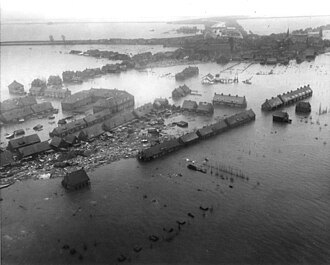
A severe storm surge overwhelmed coastal defences and flooded low-lying communities around the North Sea.
Background
Wind, tide and low-lying coasts
Strong winds pushed water toward vulnerable coastlines. Combined with the tide, the surge exceeded defences in multiple places. Night-time flooding and limited warning arrangements left many residents with little opportunity to escape.[2]
What happened
- 31 January–1 February 1953
Breaches and inundation
Dikes and sea defences failed as water entered settlements and farmland. The Netherlands suffered the greatest loss of life on land, while British coastal communities and people at sea also faced catastrophic conditions.[3]
Impact & evidence
Geographic totals need care
The Met Office records 307 deaths in England and 19 in Scotland. Dutch accounts commonly record 1,836 deaths in the Netherlands. Totals for the whole disaster differ depending on whether maritime losses are included.[2]
Aftermath & legacy
Defences and warning systems
The disaster accelerated investment in coastal protection and flood warning. Later engineering reduced risk without making it disappear: maintenance, evacuation planning and changing sea levels remain essential to assessing coastal safety.[2]
Sources & image credits (3)
- Wikipedia — North Sea flood of 1953 ↗
- Met Office: storm surge and the 1953 flood ↗
- KNMI: the 1953 flood disaster ↗
Agency for International Development Image source ↗