Nakba and Palestinian displacement
The displacement and dispossession of hundreds of thousands of Palestinians during the establishment of Israel.
- When
- 1947–1949, centred on 1948
- Where
- Palestine and neighbouring countries
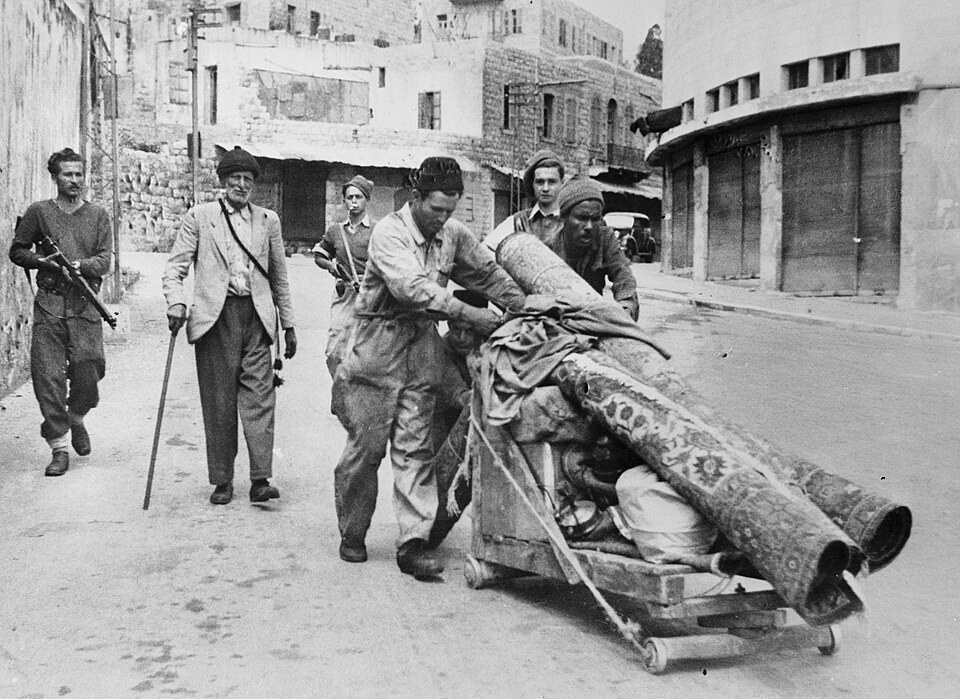
The displacement and dispossession of hundreds of thousands of Palestinians during the establishment of Israel. As British rule ended, competing national projects and the UN partition proposal were followed by escalating war. Palestinian towns and villages became sites of fighting, expulsions and flight.
Background
The end of the mandate
As British rule ended, competing national projects and the UN partition proposal were followed by escalating war. Palestinian towns and villages became sites of fighting, expulsions and flight. The creation of Israel in May 1948 and the subsequent interstate war transformed the political and territorial situation.[1]
What happened
- 1948
Communities emptied
Palestinians left or were expelled under different local circumstances, including direct military removal, attacks and fear of approaching violence. Many expected to return. Villages were depopulated, and urban neighbourhoods lost much of their population; homes, land and businesses passed out of their owners' effective control.[1]
- 1948–1949
Displacement becomes prolonged
Refugees sought shelter in the West Bank, Gaza and neighbouring countries. Return was largely prevented, and the destruction or repopulation of places of origin made temporary flight a durable loss. The armistices ended major fighting without resolving the refugees' claims.[1]
Impact & evidence
A refugee figure, not a death toll
United Nations accounts commonly use approximately 750,000 for Palestinians uprooted in 1948. The number describes displacement, not fatalities. Deaths in individual massacres and military operations need their own evidence. Descendants make up a much larger later refugee population and should not be retroactively counted as people expelled in 1948.[2]
Aftermath & legacy
An unresolved loss of home
For Palestinians, the Nakba refers to a collective catastrophe involving land, institutions, family networks and political life, not only migration. Refugee testimony and village histories preserve places that were destroyed or radically changed. The continuing question of return and restitution explains why the event remains central to Palestinian identity and political claims.[1]
Sources & image credits (2)
Photographer unidentified; source attribution retained on Wikimedia Commons. · Public domain (source record). Resized for display. Image source ↗