Montgomery bus boycott
A sustained boycott and legal challenge ending compulsory segregation on Montgomery buses.
- When
- December 1955–December 1956
- Where
- Montgomery, Alabama, United States
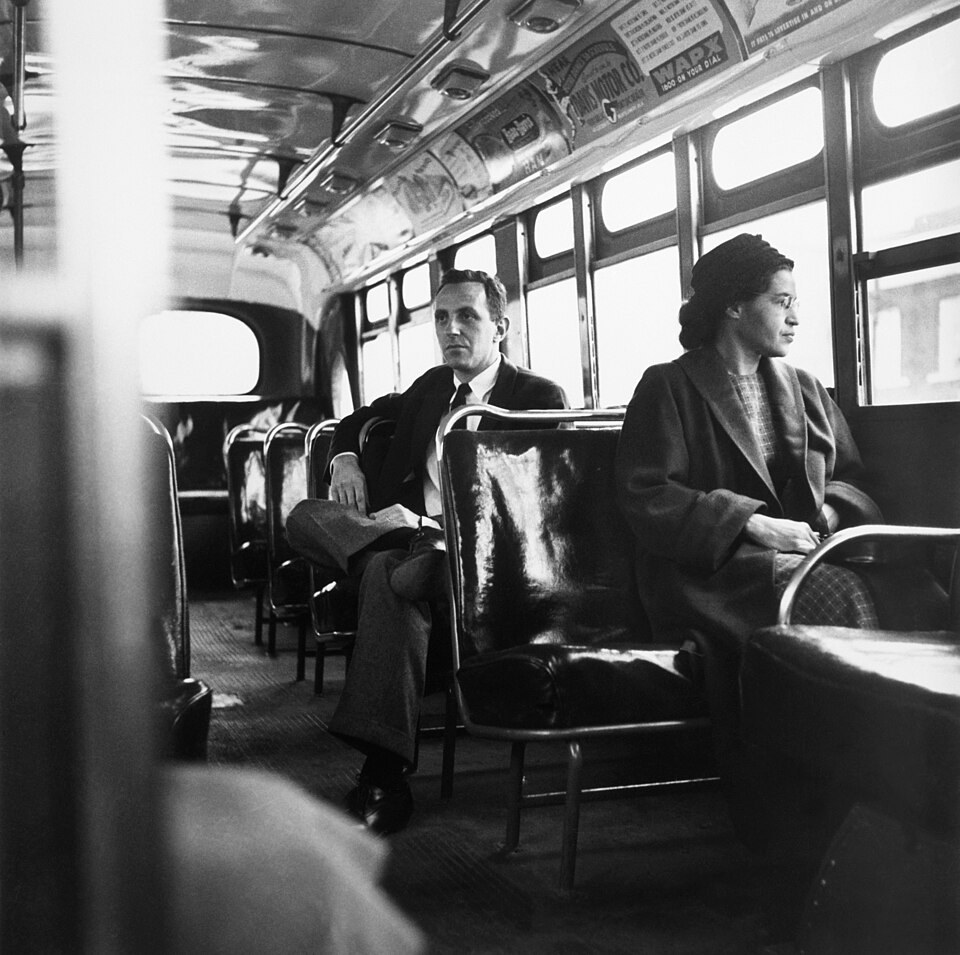
A sustained boycott and legal challenge ending compulsory segregation on Montgomery buses. Black passengers faced segregated seating and degrading treatment. Activists, including the Women's Political Council, had organised against these conditions before Rosa Parks's arrest.
Background
Resistance preceded one arrest
Black passengers faced segregated seating and degrading treatment. Activists, including the Women's Political Council, had organised against these conditions before Rosa Parks's arrest. Claudette Colvin and others also resisted bus segregation, demonstrating that the campaign grew from a community network rather than one spontaneous moment.[1]
What happened
- December 1955
A boycott becomes a movement
After Parks refused to surrender her seat and was arrested, organisers called a boycott beginning on 5 December. Participants walked, shared cars and organised transport. The Montgomery Improvement Association coordinated the campaign, with Martin Luther King Jr. emerging as a prominent spokesperson.[1]
- 1956
Pressure and litigation
The boycott continued despite arrests, intimidation and attacks. Maintaining alternative transport required everyday labour and contributions from people with limited resources. The federal case Browder v. Gayle challenged the segregation laws; its outcome, upheld by the Supreme Court, supplied the legal basis for desegregation.[1]
Impact & evidence
Economic pressure and law worked together
The boycott ended after the court ruling took effect in December 1956. It demonstrated the power of coordinated withdrawal from an essential service, but victory depended on legal action as well as passenger protest. Ending formal bus segregation did not immediately remove racist violence or other discriminatory institutions.[2]
Aftermath & legacy
Organisation became a model
The campaign strengthened networks and methods used in later civil rights struggles. Remembering drivers, walkers, women organisers and plaintiffs alongside famous leaders shows how the boycott survived for more than a year. Its durability was an achievement of collective infrastructure as much as public speaking.[1]
Sources & image credits (2)
UPI · Public domain (source record). Resized for display. Image source ↗