Maralinga nuclear testing and contamination
British nuclear tests and weapons trials contaminating Aboriginal Country with consequences lasting decades.
- When
- 1956–1963; prolonged aftermath
- Where
- South Australia
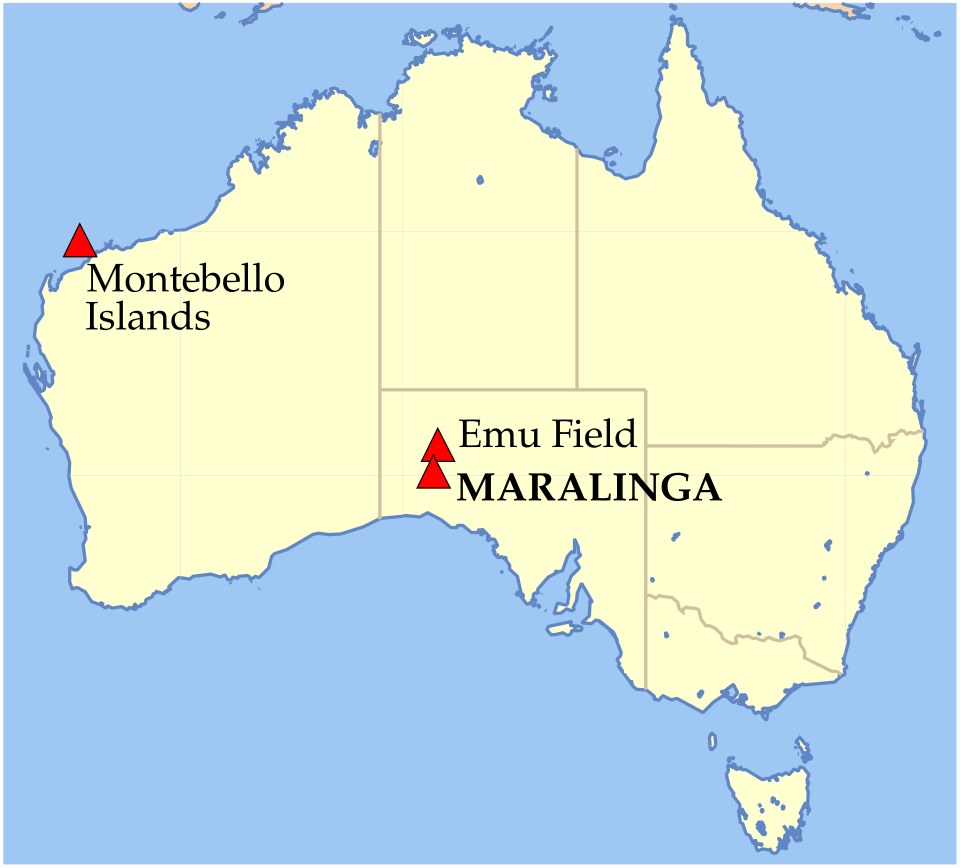
British nuclear tests and weapons trials contaminating Aboriginal Country with consequences lasting decades. Britain sought sites for its nuclear weapons programme, and the Australian government agreed to support testing. Maralinga was treated as remote territory suitable for military use.
Background
A test site chosen through imperial partnership
Britain sought sites for its nuclear weapons programme, and the Australian government agreed to support testing. Maralinga was treated as remote territory suitable for military use. That description obscured Aboriginal connections to Country and the risks to people moving through the wider region.[1]
What happened
- 1956–1957
Major nuclear tests
Britain conducted seven nuclear explosions at Maralinga in the Buffalo and Antler series. Military personnel and local people faced radiation hazards. Finding and warning Aboriginal families received inadequate resources, while secrecy and official priorities limited meaningful public scrutiny.[1]
- Through 1963
Smaller trials leave major contamination
Weapons-component experiments continued beyond the main explosions. Some dispersed plutonium through burning or conventional explosives. Their description as minor trials referred to the experimental programme, not to an assurance that the resulting contamination was minor or short-lived.[1]
Impact & evidence
No simple casualty total
Contamination restricted access to food, water and culturally important places. Veterans and Aboriginal communities raised health concerns, but a defensible single death toll cannot be assigned to the programme. Exposure evidence and the lasting social harm must be described without inventing a precise mortality figure.[2]
Aftermath & legacy
Inquiry, cleanup and return
A 1985 royal commission criticised the conduct and oversight of testing. Later remediation and compensation addressed some consequences, and land was formally returned to its Tjarutja owners in 2009. These measures followed decades of exclusion and did not erase the destruction of trust or the burden of managing contaminated Country.[1]
Sources & image credits (2)
Original uploaded by Jakew (Transfered by rr2000 ) · CC BY-SA 3.0 (source record). Resized for display. Image source ↗