Java War
Diponegoro's resistance to Dutch expansion became a devastating war followed by stronger colonial control.
- When
- 1825–1830
- Where
- Central and eastern Java, present-day Indonesia
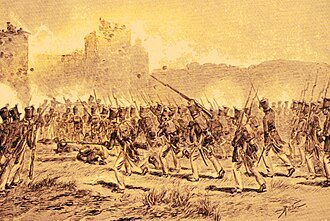
Diponegoro's resistance to Dutch expansion became a devastating war followed by stronger colonial control.
Background
Interference, land and authority
Prince Diponegoro's conflict with colonial officials developed amid Dutch intervention in Javanese court politics, economic pressures and religious opposition. A road project affecting his estate helped trigger confrontation in 1825, but the war's causes went beyond that immediate dispute. Not all Javanese rulers supported the rebellion.[1]
What happened
- 1825–1827
Rebellion and guerrilla warfare
Diponegoro's followers initially challenged Dutch forces around Yogyakarta and across a wider region. Popular support helped them sustain guerrilla operations. Dutch commanders answered with expanding networks of fortified posts that restricted movement and gradually separated resistance forces from supplies and supporters.[1]
- 1830
Capture during negotiations
Diponegoro was arrested at Magelang during negotiations with General Hendrik de Kock. He was exiled to Sulawesi and died there in 1855. His removal ended the central rebellion without settling the grievances that had produced it.[1]
Impact & evidence
Death beyond the battlefield
Historical summaries commonly estimate about 200,000 Javanese civilian deaths from violence, hunger and disease, alongside military losses. This is an estimate of a war's wider human consequences, not a verified list of people killed in combat. Disrupted cultivation and displacement helped make the conflict catastrophic.[1]
Aftermath & legacy
Conquest and the colonial collection
Dutch colonial warfare also destroyed local institutions and carried objects away as trophies. Museum collections preserve material traces of this violence, although collecting histories long celebrated conquest. The Java War strengthened Dutch power; the subsequent Cultivation System extracted agricultural wealth from communities already weakened by war.[2]
Sources & image credits (2)
J.P. van de Veer Image source ↗