Jamaica's Baptist War
A strike associated with Sam Sharpe became a major revolt, followed by brutal colonial repression.
- When
- December 1831–1832
- Where
- Western Jamaica
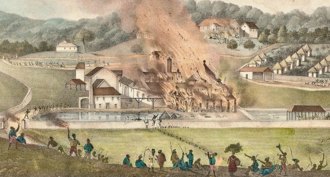
A strike associated with Sam Sharpe became a major revolt, followed by brutal colonial repression.
Background
Organising through religious networks
Sam Sharpe, an enslaved Baptist deacon, helped organise resistance to unpaid labour. Church networks enabled communication across plantations. Christianity did not produce a single political position: enslaved worshippers, missionaries and slaveholders interpreted religion through very different interests.[2]
What happened
- December 1831
A planned strike becomes rebellion
Sharpe and supporters planned to stop working after Christmas unless paid. The confrontation escalated into attacks on plantation property and wider rebellion. The movement involved tens of thousands of enslaved people, although participation and intentions differed across localities.[2]
- 1832
Suppression and executions
Colonial forces crushed the revolt. Hundreds of enslaved people were killed in fighting or executed afterward; Sharpe was hanged in May 1832. Repression also targeted Baptist and other dissenting religious institutions accused of encouraging resistance.[1]
Impact & evidence
Enslaved people forced the issue
The rebellion increased the political cost of maintaining slavery and exposed its dependence on violence. It belongs beside parliamentary campaigns and economic debates in explaining abolition. Treating emancipation solely as a gift from Britain removes the resistance of the people who were enslaved.[1]
Aftermath & legacy
Remembering the struggle for freedom
Sharpe became one of Jamaica's national heroes. Library collections preserve newspapers, official records and other materials that show how participants and authorities represented the revolt. Those records require attention to their authors: a colonial label of criminality is not an impartial account of a struggle against enslavement.[3]
Sources & image credits (3)
- Wikipedia — Baptist War ↗
- National Library of Jamaica: Samuel Sharpe ↗
- National Library of Jamaica: rebellion collections ↗
Adolphe Duperly Image source ↗