Indonesian independence revolution
Military resistance and diplomacy defeating Dutch attempts to restore colonial rule.
- When
- 1945–1949
- Where
- Indonesia
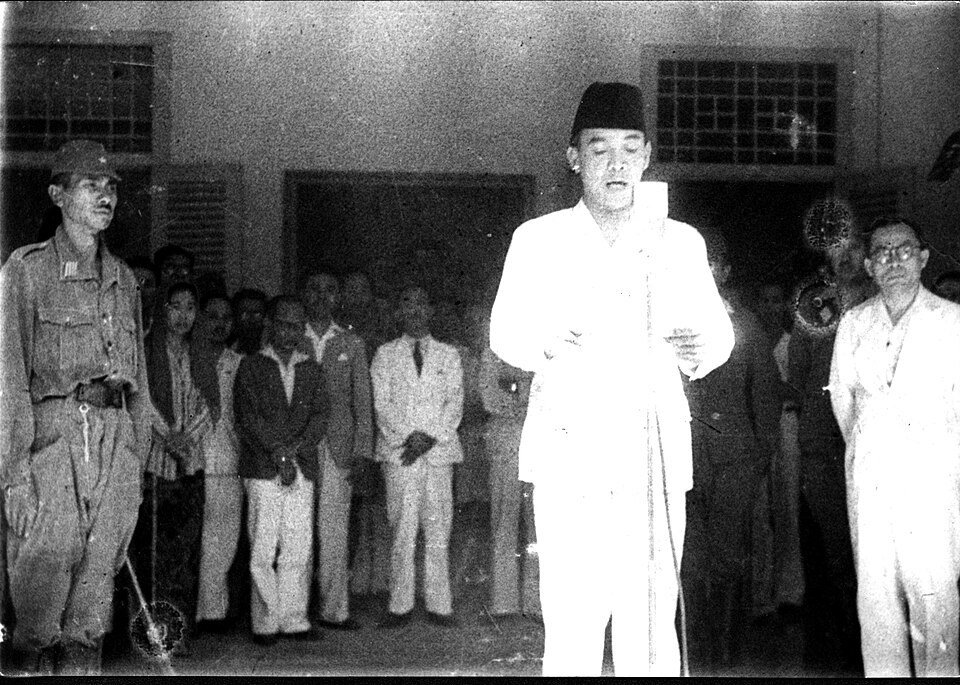
Military resistance and diplomacy defeating Dutch attempts to restore colonial rule. Japan's wartime occupation disrupted Dutch colonial government. After Japan's surrender, Sukarno and Mohammad Hatta proclaimed Indonesian independence on 17 August 1945.
Background
Occupation ends and sovereignty is declared
Japan's wartime occupation disrupted Dutch colonial government. After Japan's surrender, Sukarno and Mohammad Hatta proclaimed Indonesian independence on 17 August 1945. The declaration established a republican claim to sovereignty, but Dutch authorities sought to regain control and did not initially accept it.[1]
What happened
- 1945–1947
A contested republic
Republican forces and local armed groups confronted returning colonial power amid social upheaval. Negotiations produced fragile agreements while fighting continued. Violence also affected civilians and minority communities, making the revolution more complex than a simple series of battles between two regular armies.[1]
- 1947–1949
Offensives and international pressure
The Netherlands launched major military operations, described officially as police actions, and attempted to dismantle republican authority. Guerrilla resistance continued. International pressure and diplomacy contributed to the Round Table Conference and the transfer of sovereignty in December 1949.[1]
Impact & evidence
The settlement was not complete
The transfer initially created a federal United States of Indonesia and left western New Guinea outside the settlement. Independence is therefore commemorated from the 1945 proclamation, while 1949 marks Dutch recognition and transfer. Treating only one of these dates as the entire event erases either Indonesian agency or the years of struggle that followed.[2]
Aftermath & legacy
A republic shaped by revolution
The conflict helped establish the army and nationalist leadership as central forces in the new state. Its legacy includes independence, civilian suffering and debates over colonial responsibility. Archival records from both Indonesia and the Netherlands are essential to reconstructing events once framed very differently by the opposing governments.[1]
Sources & image credits (2)
- Wikipedia — Indonesian National Revolution ↗
- Dutch National Archives — Sovereignty transfer in 1949 ↗
Frans Mendur (also Frans Mendoer) (1913 – 1971) · Public domain (source record). Resized for display. Image source ↗