Indian famine of 1899–1900
A renewed harvest crisis struck communities still recovering from famine, producing severe hunger and epidemic deaths.
- When
- 1899–1900 and aftermath
- Where
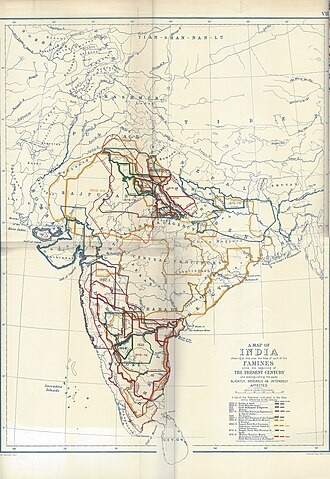
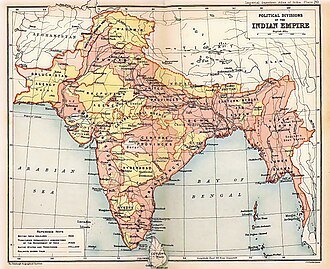
- Western and central India, including princely states
A renewed harvest crisis struck communities still recovering from famine, producing severe hunger and epidemic deaths.
Background
Little time to recover
Drought returned shortly after the 1896–1897 famine. Households weakened by debt, lost livestock and previous hunger faced another failure of crops and income. Conditions varied between directly administered British territories and princely states, so neither relief provision nor mortality was uniform.[1]
What happened
- 1899–1900
Hunger and epidemics reinforced each other
Relief works and assistance expanded, but severe deprivation continued. Cholera and other diseases added to the toll. The 1901 commission examined administration and recommended changes, providing evidence of policy debates while also representing the governing system under review.[2]
Impact & evidence
Territorial scope changes the total
The census account reports the commission's estimate of about one million famine deaths in British territory and adds a much less secure estimate of roughly three million in princely states. These should not be presented as equally well-established counts. The combined catastrophe was larger than figures covering British-administered districts alone.[3]
Officials admitted the limits of their information
A parliamentary answer stated that even an approximate total of direct and indirect famine deaths could not then be formed. It also distinguished the effects of cholera and smallpox. That contemporary admission is a reason to scrutinise later confident totals, not to disregard the scale of the disaster.[4]
Aftermath & legacy
Relief codes and responsibility
Administrative revisions followed, but codes on paper did not guarantee timely access to adequate food. The famine's history requires attention to resources, local implementation and the vulnerability created by the preceding crisis. It should remain distinct from both the 1896–1897 famine and all-India totals covering an entire decade.[2]
Sources & image credits (4)
- Wikipedia — Indian famine of 1899–1900 ↗
- Indian Famine Commission report, 1901 ↗
- Census of India: historical famine estimates ↗
- Hansard: famine and plague statistics, June 1900 ↗
Edinburgh Geographical Institute; J. G. Bartholomew and Sons. Image source ↗