Highland Clearances in Scotland
Landlord-led clearances removed communities to reorganise land for commercial agriculture and other estates.
- When
- Late eighteenth–nineteenth centuries
- Where
- Scottish Highlands and Islands
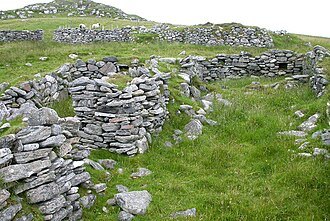
Landlord-led clearances removed communities to reorganise land for commercial agriculture and other estates.
Background
Landholding transformed
Highland society changed as landlords increasingly treated estates as commercial property. Tenants' customary expectations offered limited protection against owners' decisions. The Clearances were a series of local processes over many decades, not one centrally ordered expulsion carried out on a single date.[1]
What happened
- Late eighteenth–early nineteenth centuries
Communities moved for sheep farming
Landlords cleared inland settlements to create larger sheep farms, sometimes moving residents to smaller coastal holdings. These new settlements could lack enough land to sustain families and rely on fishing, kelp production or seasonal work. Relocation within the Highlands could therefore be deeply disruptive without immediately taking people overseas.[1]
- 1809–1821
Sutherland: nearly 15,000 people relocated
The Scottish History Society describes the Countess of Sutherland’s estate programme, financed with Lord Stafford’s wealth and organised by James Loch. Inland land became commercial sheep farms while families were relocated to coastal crofts. Patrick Sellar’s eviction methods became notorious. Sutherland was exceptionally large and should not stand for every estate, but its records show how a planned reorganisation displaced communities.[2]
- Mid-nineteenth century
Emigration and further evictions
Economic crisis and potato failure compounded insecurity. Some estates supported or compelled emigration, while people also left in search of livelihoods under constrained circumstances. Assisted passage is not by itself proof of voluntary choice when remaining on the land was no longer possible.[1]
Impact & evidence
Avoiding a false single total
Eviction, resettlement and emigration overlap but are not identical measures. There is no simple count that captures all people affected across the entire period. Individual estate records, testimony and settlement remains provide more precise evidence than treating all Highland population decline as direct expulsion.[1]
Aftermath & legacy
Resistance and land reform
Tenant resistance and later crofters' campaigns challenged the power of landlords. The Clearances remain central to debates about land ownership, Gaelic culture and depopulation. Their history should preserve both the coercion suffered by communities and the differences between particular estates and phases.[1]
Sources & image credits (2)
Sarah Egan Image source ↗