Overthrow of the Hawaiian Kingdom
The removal of Queen Liliʻuokalani and the destruction of Hawaiian sovereign government.
- When
- 17 January 1893
- Where
- Honolulu, Hawaiian Kingdom
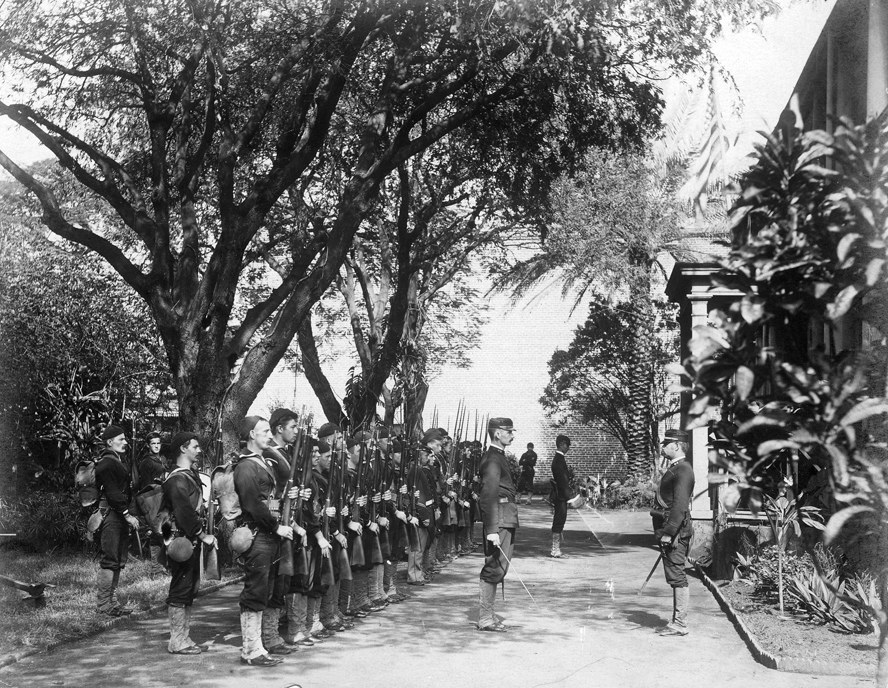
The removal of Queen Liliʻuokalani and the destruction of Hawaiian sovereign government. Hawaiian politics were shaped by conflict over royal authority, voting rights and the power of foreign commercial interests. Queen Liliʻuokalani sought constitutional changes that would strengthen the monarchy and Native Hawaiian political participation.
Background
A constitutional and commercial struggle
Hawaiian politics were shaped by conflict over royal authority, voting rights and the power of foreign commercial interests. Queen Liliʻuokalani sought constitutional changes that would strengthen the monarchy and Native Hawaiian political participation. Opponents organised a Committee of Safety and pursued a government more favourable to their interests.[1]
What happened
- January 1893
A government displaced
United States diplomatic and military involvement formed part of the circumstances in which the committee moved against the queen. On 17 January it proclaimed a provisional government. Liliʻuokalani yielded authority under protest, seeking to avoid bloodshed and expecting the United States to investigate its representatives' actions rather than treating the surrender as voluntary consent.[1]
- 1894–1898
From provisional rule to annexation
A republic succeeded the provisional government in 1894. Native Hawaiians organised petitions against annexation, but the United States annexed the islands in 1898 through a congressional joint resolution. The overthrow and annexation were connected events five years apart, not a single constitutional transfer approved by the Hawaiian population.[1]
Impact & evidence
Loss of political sovereignty
The central consequence was the removal of an internationally recognised kingdom's government and the displacement of its political authority. Describing the coup only through its limited immediate bloodshed misses the loss of sovereignty and the altered control of land and institutions that followed.[2]
Aftermath & legacy
Protest and historical reckoning
Hawaiian resistance continued in petitions, political organising and later sovereignty movements. The documentary record includes the queen's protest and opposition to annexation. These sources challenge accounts that portray incorporation into the United States as an uncontested or universally welcomed development.[1]
Sources & image credits (2)
- Wikipedia — Overthrow of the Hawaiian Kingdom ↗
- United States National Archives — Annexation and the overthrow ↗
Photographer unidentified · Public domain (source record). Resized for display. Image source ↗