The birth of the World Wide Web
Opening a linked information system for use across the internet.
- When
- 1989–1993
- Where
- CERN, Switzerland
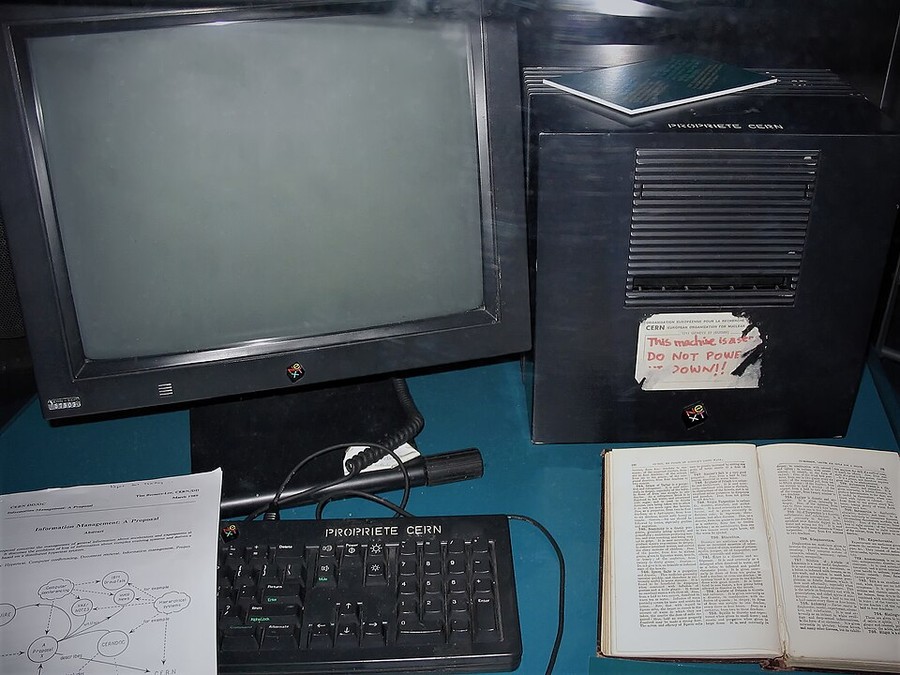
Tim Berners-Lee developed the Web at CERN to connect information held across different computers. Its growth depended on technical standards and the decision to make the software freely available, rather than on the invention of the internet itself.
Background
Information scattered across systems
Researchers needed to find and share documents across institutions. Hypertext supplied a way to move between related pieces of information.[1]
What happened
Impact & evidence
Connecting documents across computers
Tim Berners-Lee’s proposal at CERN addressed the difficulty of sharing information among researchers using different computers. The Web combined linked documents, addresses and a means of requesting pages; an early browser and server made the proposal usable. It operated over the existing Internet. CERN’s 1993 decision to make the software freely available helped others build compatible services without seeking a licence from the laboratory.[1]
Aftermath & legacy
An open platform
The Web's availability helped it spread far beyond physics. It is one service built on the internet, so the histories of the Web and the underlying network should remain distinct.[1]
Sources & image credits (1)
User:Coolcaesar at en.wikipedia; CC BY-SA 3.0; via Wikimedia Commons. Image source ↗