Cuba's national literacy campaign
Mobilising volunteer teachers for a nationwide adult-literacy campaign.
- When
- 1961
- Where
- Cuba
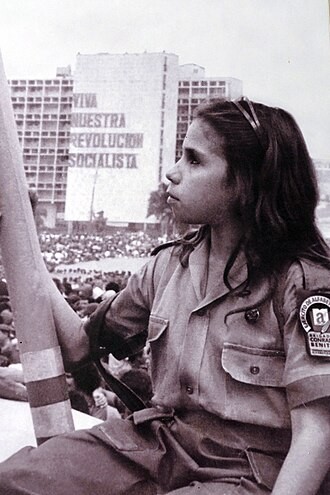
Cuba's 1961 campaign brought literacy teaching into homes and communities across the country. Young volunteers and adult educators participated in an intensive national effort whose methods later influenced programmes abroad.
Background
Unequal access
Access to schooling and literacy was uneven, especially between urban and rural communities. The campaign treated adult education as a national mobilisation rather than a classroom-only undertaking.[1]
What happened
Impact & evidence
Teaching beyond the classroom
The 1961 campaign sent volunteer teachers into communities that formal schooling had not adequately reached. UNESCO’s retrospective records about 707,000 people learning to read and write and describes the participation of young volunteers. Its speed depended on mass mobilisation and the practical encounter between teachers and learners, rather than the construction of schools alone.[2]
Aftermath & legacy
An international educational model
The campaign became an influential example of mass literacy work. Its educational achievements can be examined without treating literacy as equivalent to political freedom or unrestricted expression.[1]
Sources & image credits (2)
Maxence; CC BY-SA 2.0; via Wikimedia Commons. Image source ↗