Great Kantō earthquake
Earthquake damage and spreading fires devastated Japan's capital region.
- When
- 1 September 1923 and aftermath
- Where
- Tokyo, Yokohama and surrounding Kanto region, Japan
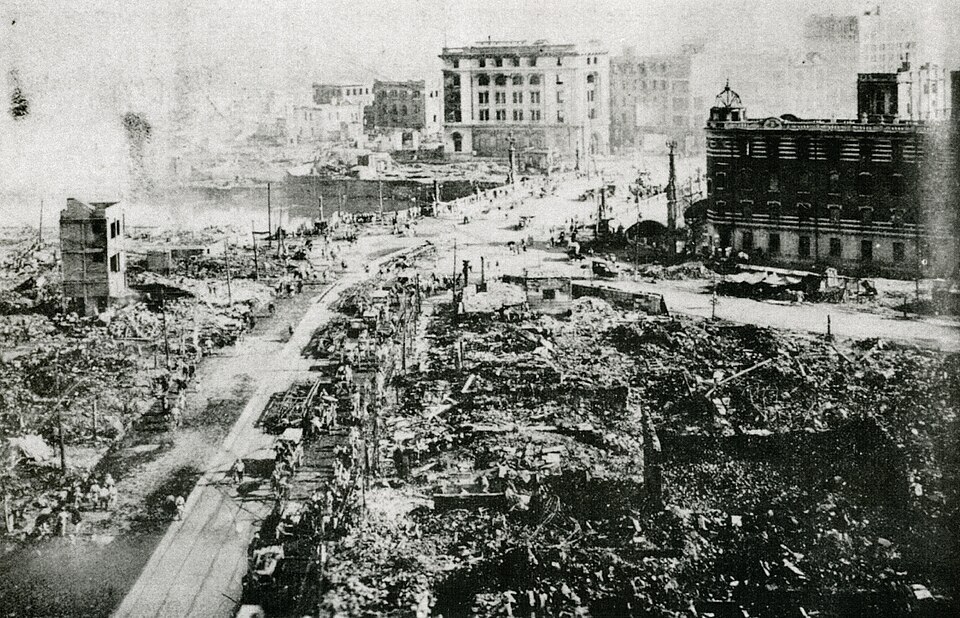
Earthquake damage and spreading fires devastated Japan's capital region.
Background
A crowded urban region
Dense neighbourhoods, combustible buildings and limited open space shaped the disaster. The earthquake struck close to midday, when cooking fires added to the danger posed by collapsed structures and broken infrastructure.[1]
Tokyo was not the only devastated city
The disaster struck the wider Kantō region, including the major port of Yokohama and neighbouring prefectures. Damage to transport and communications complicated both escape and relief. Its scale came from the interaction of a powerful offshore earthquake with a densely settled metropolitan and coastal region.[1]
What happened
- 1 September 1923
Shaking was followed by fire
Tokyo and Yokohama suffered extensive destruction. Fires spread through damaged districts and trapped people seeking safety. The physical catastrophe therefore involved multiple hazards rather than building collapse alone.[2]
Impact & evidence
Approximately 105,000 dead or missing
Japan's disaster-management account gives roughly 105,000 direct deaths or missing persons, with fire responsible for most losses. The figure includes people recorded as missing, not only recovered bodies. Older, larger totals reflect different historical estimates.[2]
Aftermath & legacy
Reconstruction and violence
Rebuilding was accompanied by another human catastrophe: false rumours fuelled killings of Koreans and others by vigilantes and state personnel. Those attacks were deliberate violence, not an unavoidable natural effect of the earthquake, and require their own documented account alongside the reconstruction story.[1]
Sources & image credits (2)
urbzoo · CC BY 2.0 Image source ↗