French conquest of Vietnam
French military campaigns and imposed treaties divided Vietnam into a colony and protectorates.
- When
- 1858–1885
- Where
- Vietnam: Cochinchina, Annam and Tonkin
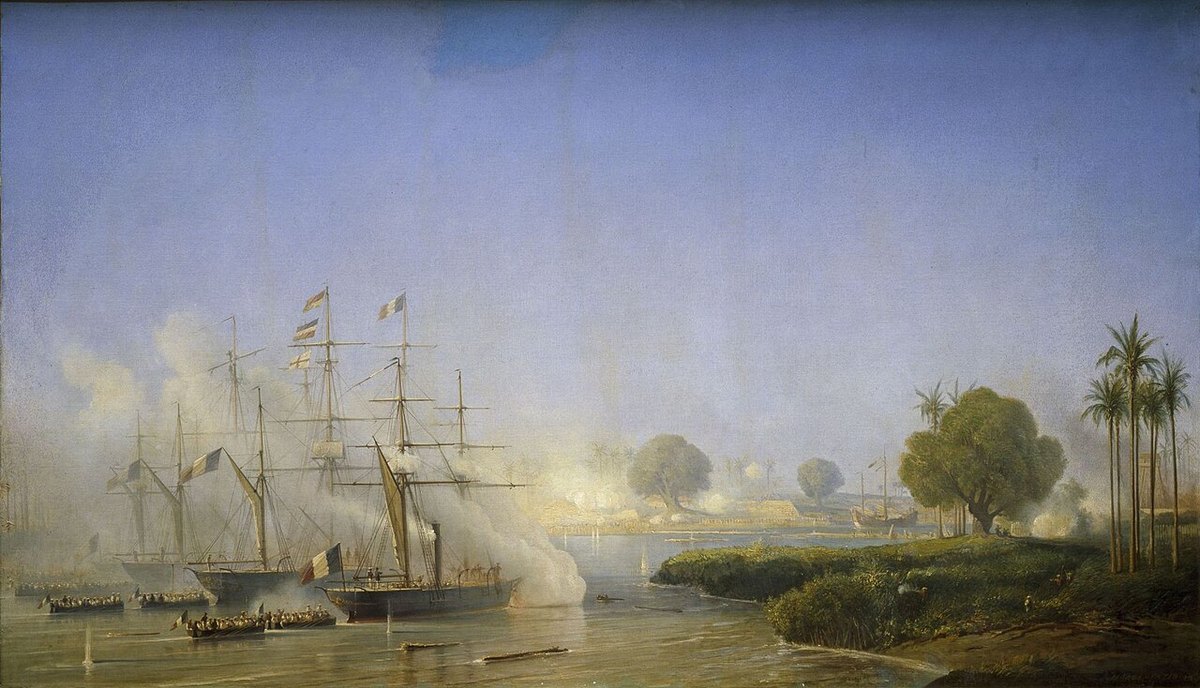
French military campaigns and imposed treaties divided Vietnam into a colony and protectorates.
Background
Commercial ambition and imperial claims
French expansion combined strategic and commercial ambitions with claims to protect Catholic missionaries and spread civilisation. These justifications described French interests; they did not establish Vietnamese consent. Conquest unfolded through successive campaigns against the Nguyễn state rather than one decisive occupation.[2]
What happened
- 1858–1867
From Đà Nẵng to southern annexation
The opening expedition attacked Đà Nẵng in 1858. French forces then seized Saigon and extended their southern foothold. Treaties and further occupation established Cochinchina as a colony, while resistance continued beyond the territory immediately controlled by the invaders.[1]
- 1873–1885
Expansion into northern Vietnam
French campaigns in Tonkin and pressure on Huế brought conflict with Vietnamese forces and China. The treaties imposed in 1883 and 1884 established protectorates over Annam and Tonkin. The Sino-French War and its settlement helped secure France's position without bringing local opposition to an end.[2]
Impact & evidence
Power behind a retained court
The Nguyễn court survived under constrained authority. Retaining a monarch and ceremonial institutions did not preserve effective independence: French officials controlled crucial decisions. Colonial photographs and representations of court life can make this unequal arrangement appear more consensual than it was.[3]
Aftermath & legacy
Conquest did not mean acceptance
The Cần Vương movement and other resistance followed the formal settlement. France subsequently combined Vietnam's colonial territories with Cambodia and Laos in French Indochina. The military chronology explains the creation of that order, but its social effects also included taxation, extraction and the reorganisation of political authority.[2]
Sources & image credits (3)
- Wikipedia — French conquest of Vietnam ↗
- Musée de l'Armée: Indochina, conquest and resistance, 1859–1907 ↗
- Musée du quai Branly: perspectives on the imperial court of Huế ↗
Antoine Léon Morel-Fatio Image source ↗