French abolition of slavery
The Second Republic abolished slavery after an earlier abolition had been reversed.
- When
- 1848
- Where
- French colonies
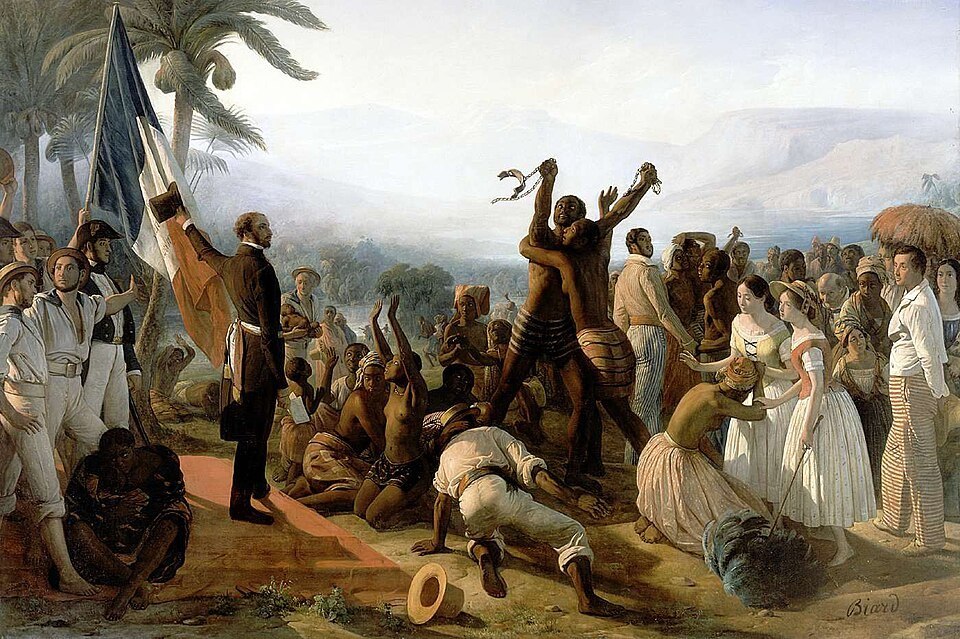
The Second Republic abolished slavery after an earlier abolition had been reversed.
Background
A freedom previously revoked
Revolutionary France had abolished slavery in 1794, but Napoleon’s regime restored it in parts of the colonial empire. The revolution of 1848 created another opening for abolitionists and enslaved people pressing for freedom.[2]
What happened
- 27 April 1848
The decree
The provisional government adopted abolition, with Victor Schœlcher playing a prominent role in its preparation. Implementation unfolded across different colonies, where local mobilisation also shaped the timing and meaning of emancipation.[2]
Impact & evidence
Legal status transformed
People formerly treated as property acquired freedom and new claims to citizenship. Yet abolition did not itself dismantle plantation ownership, racial hierarchy or colonial domination. Those who had resisted slavery were agents in the change, not merely recipients of legislation.[2]
Aftermath & legacy
A continuing struggle over equality
The decree became a major republican milestone, but commemoration is incomplete when it honours legislators alone. The experiences of emancipated families, labour coercion after abolition and the persistence of empire explain the distance between legal freedom and substantive equality.[2]
Sources & image credits (2)
- Wikipedia — Décret d'abolition de l'esclavage du 27 avril 1848 ↗
- Élysée: history of the 1848 abolition ↗
François-Auguste Biard · Public domain Image source ↗