Destruction of Beijing's Old Summer Palace
Anglo-French looting and British burning of Beijing’s imperial gardens.
- When
- October 1860
- Where
- Yuanmingyuan, Beijing, China
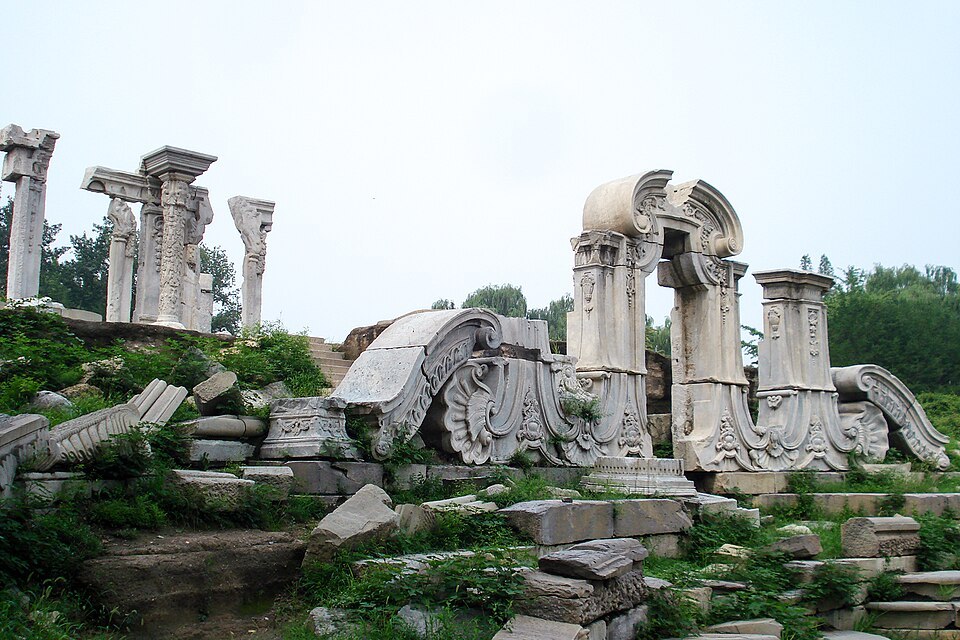
Anglo-French looting and British burning of Beijing’s imperial gardens.
Background
War over imperial access
The Second Opium War brought British and French forces to Beijing. Yuanmingyuan was an extensive complex of gardens, residences and collections, integral to Qing court life rather than simply an ornamental attraction.[1]
A working imperial landscape
The complex developed over the eighteenth and early nineteenth centuries and served as a principal residence and administrative setting for Qing emperors. Gardens, libraries and collections were connected to court life. Burning and looting therefore destroyed accumulated records and working spaces as well as valuable portable objects.[1]
What happened
- October 1860
Looting and deliberate burning
Allied troops looted the complex. British forces then burned it on orders from Lord Elgin, who invoked the torture and deaths of captured envoys and prisoners as justification. Destruction of cultural property became an instrument of punishment and coercion.[1]
Impact & evidence
Objects dispersed through empire
Treasures removed during the campaign entered private collections and museums. Their later display cannot be separated from the circumstances of seizure. The loss included buildings, collections and the relationships between objects and their original setting.[2]
Aftermath & legacy
Ruins and restitution
Yuanmingyuan remains an important symbol of imperial aggression in Chinese historical memory. Debates over return, provenance and collecting continue, while surviving ruins represent only a fragment of a much larger destroyed landscape.[1]
Sources & image credits (2)
Windmemories · CC BY-SA 4.0 Image source ↗