Deportation of the Crimean Tatars
Stalin's government deporting an entire people under an allegation of collective disloyalty.
- When
- May 1944 and subsequent exile
- Where
- Crimea; principally Soviet Central Asia
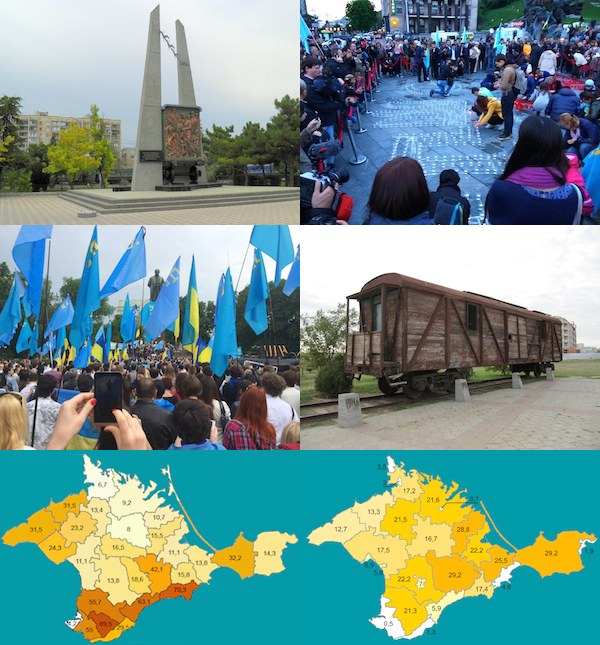
Stalin's government deporting an entire people under an allegation of collective disloyalty. After Soviet forces retook Crimea, authorities accused the Crimean Tatar population collectively of wartime collaboration. Individual service or innocence did not protect families from the order.
Background
Collective punishment as state policy
After Soviet forces retook Crimea, authorities accused the Crimean Tatar population collectively of wartime collaboration. Individual service or innocence did not protect families from the order. Stalin's government had already used large-scale ethnic deportation elsewhere, providing the administrative machinery for another coerced population transfer.[1]
What happened
- 18–20 May 1944
Removal by train
Security forces gave families little time to prepare and transported them in freight trains to distant destinations, principally Uzbekistan. Around 190,000 Crimean Tatars were deported in the main operation. Illness, inadequate water and poor sanitary conditions made the journey dangerous, especially for children and older people.[1]
- Following years
Restricted settlement
Deportees lived under special-settlement controls and faced difficult work and housing conditions. Their homes in Crimea were lost, and authorities altered the peninsula's population and place names. Release from some restrictions did not automatically restore the right to return or recover property.[1]
Impact & evidence
Different denominators produce different estimates
Archival and community estimates of mortality differ substantially. Research based on Soviet records documents tens of thousands of deaths in the early exile years; some calculations include other deported Crimean groups. A percentage must identify its population and period rather than be presented as a universally agreed Crimean Tatar death rate.[2]
Aftermath & legacy
A long campaign to return
Crimean Tatars organised petitions and a sustained movement for return. Large-scale return became possible only decades later, especially toward the end of the Soviet period. The deportation's consequences included family bereavement, interrupted cultural life and the practical struggle to rebuild communities after prolonged exclusion.[1]
Sources & image credits (2)
- Wikipedia — Deportation of the Crimean Tatars ↗
- J. Otto Pohl — The Deportation and Fate of the Crimean Tatars ↗
Montage by PlanespotterA320, using works by salech hcelas, Visem, kaktuse, Rartat, Refat and Riwnodennyk. · CC BY-SA 4.0 (source record). Resized for display. Image source ↗