Creole ship revolt
Enslaved people seized a domestic slave-trading vessel and reached freedom in the Bahamas.
- When
- 1841–1842
- Where
- The Creole and Nassau, Bahamas
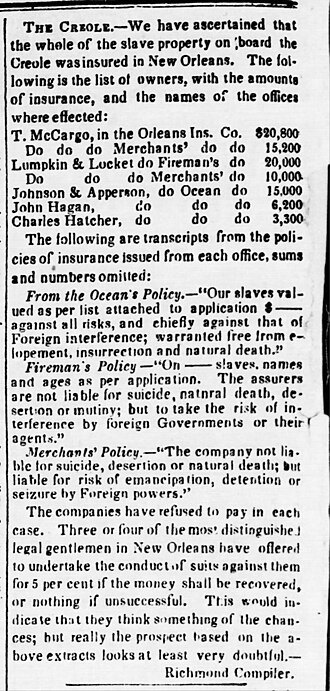
Enslaved people seized a domestic slave-trading vessel and reached freedom in the Bahamas.
Background
The coastwise trade
The Creole carried enslaved people from Virginia toward New Orleans for sale. Coastal shipping linked the Upper South to expanding plantation markets. Those aboard faced not only continued enslavement but removal from existing families and communities.[1]
What happened
- November 1841
A revolt redirects the voyage
Madison Washington and other captives seized control and forced the ship to Nassau. One trader was killed during the revolt. Reaching British territory changed the legal setting: slavery had been abolished there, creating a conflict between American property claims and the freedom sought by the captives.[2]
Impact & evidence
A successful escape on an unusual scale
Historical accounts commonly describe 128 people gaining freedom as a result of the revolt. Some alleged leaders were initially detained while authorities considered their legal position and were later released. The sequence should not be reduced to an immediate, identical experience for everyone aboard.[1]
Aftermath & legacy
An international dispute
The case generated diplomatic demands and abolitionist argument over slavery, maritime jurisdiction and the right to resist. Later retellings sometimes embellished Washington's personal story. The well-established significance is the collective action that turned a voyage toward sale into one of the largest successful escapes from American slavery.[3]
Sources & image credits (3)
- Wikipedia — Creole mutiny ↗
- Virginia Museum of History & Culture: acts of resistance ↗
- Whitney Plantation: slave rebellions and the Creole revolt ↗
Richmond Compiler Image source ↗