Congo crisis
Independence followed by secession, foreign intervention and the rise of Mobutu.
- When
- 1960–1965
- Where
- Republic of the Congo, present-day Democratic Republic of the Congo
Independence followed by secession, foreign intervention and the rise of Mobutu. The Congo became independent from Belgium on 30 June 1960. Colonial rule had left deep inequalities in administration, education and military command.
Background
Independence without a stable transfer of power
The Congo became independent from Belgium on 30 June 1960. Colonial rule had left deep inequalities in administration, education and military command. A mutiny in the army was followed by Belgian military intervention and the secession of mineral-rich Katanga, creating an immediate challenge to the new national government.[1]
What happened
- 1960–1961
A struggle over government and intervention
Prime Minister Patrice Lumumba sought international assistance. United Nations intervention, Belgian interests and Cold War competition intersected with disputes between Congolese leaders. President Joseph Kasa-Vubu and Lumumba attempted to dismiss one another, and Joseph-Désiré Mobutu intervened militarily. Lumumba was detained and killed in Katanga in January 1961.[1]
- 1961–1965
Secession ends, conflict continues
UN operations eventually ended Katanga's secession, but rebellions and foreign involvement continued. The crisis was not one continuous battle between two fixed sides: alliances changed, and provincial conflicts had their own causes. Mobutu's coup in November 1965 established the regime that would dominate the country for decades.[1]
Impact & evidence
Violence and weakened sovereignty
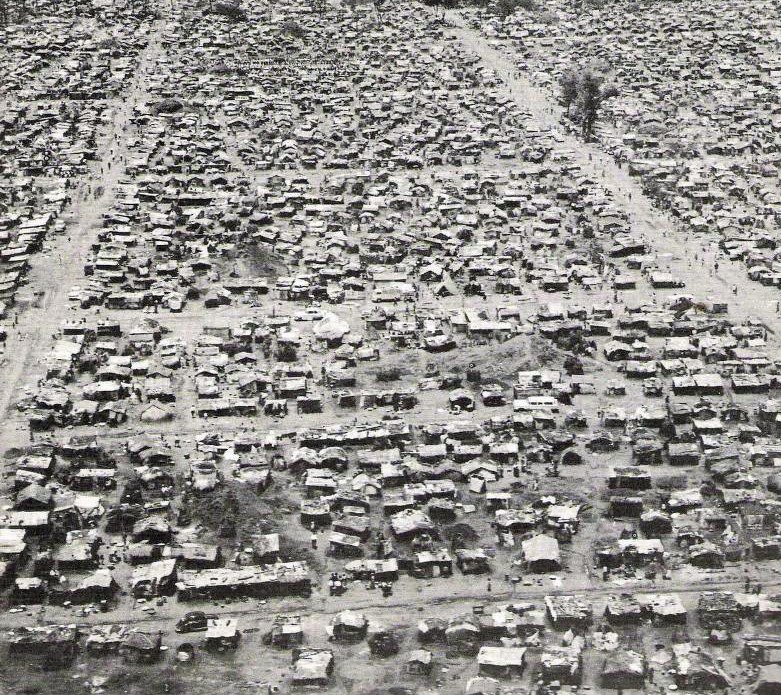
The crisis brought widespread deaths, displacement and insecurity. Retrospective summaries often cite roughly 100,000 deaths, but this is an estimate across several conflicts rather than a verified victim register. Foreign intervention narrowed the space for Congolese political choices while competing leaders also exercised responsibility for their decisions.[2]
Aftermath & legacy
The foundations of a long dictatorship
Mobutu presented centralised authority as an answer to disorder and received substantial foreign support. The crisis helped establish the political conditions for his rule. Its history requires both Congolese perspectives and scrutiny of the external governments that treated independence through the priorities of the Cold War.[1]
Sources & image credits (2)
- Wikipedia — Congo Crisis ↗
- United States Office of the Historian — Congo, decolonisation and the Cold War ↗
Photographer unidentified · Public domain (source record). Resized for display. Image source ↗