Church Rock uranium mill spill
A uranium-mill tailings dam failure releasing radioactive waste into a river used by downstream communities.
- When
- 16 July 1979
- Where
- New Mexico and the Puerco River, United States
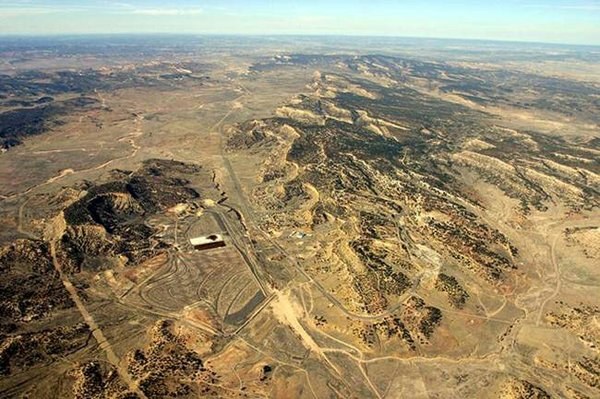
A uranium-mill tailings dam failure releasing radioactive waste into a river used by downstream communities. The United Nuclear Corporation mill near Church Rock produced liquid and solid waste stored behind a tailings dam. Nearby Diné communities already lived with the effects of uranium development.
Background
Uranium processing and waste storage
The United Nuclear Corporation mill near Church Rock produced liquid and solid waste stored behind a tailings dam. Nearby Diné communities already lived with the effects of uranium development. Waste containment failure threatened a river system connected to livestock, land and everyday activities beyond the industrial site.[1]
What happened
- 16 July 1979
The dam breaches
A section of the disposal facility failed, releasing approximately 93 million US gallons of contaminated liquid and substantial solid tailings into the Puerco River. The waste travelled downstream. This was a mill-waste release, not a reactor accident or a nuclear explosion.[1]
- After the spill
Warnings and environmental response
Communities faced uncertainty about water and livestock safety. Cleanup and monitoring had to address contaminants dispersed along a river rather than confined inside the plant. The episode became part of wider demands for accountability over uranium mining and processing on and near Navajo lands.[1]
Impact & evidence
Long-term evidence is essential
The spill released radioactive and chemically hazardous material, but no reliable single death toll can be assigned to it. Measuring contamination, reconstructing individual exposure and establishing health effects are different tasks. Comparisons with reactor accidents require stated units and should not rely on an unexplained claim of being the largest.[2]
Aftermath & legacy
A continuing environmental justice case
The disaster highlighted whose risks received public attention and whose warnings were heard. Its aftermath belongs to the longer history of contaminated mine and mill sites, cleanup obligations and community demands for safe water. The absence of a precise mortality total does not mean the release was harmless.[1]
Sources & image credits (2)
- Wikipedia — Church Rock uranium mill spill ↗
- US EPA — Church Rock and Grants mining district review ↗
EPA · Public domain (source record). Resized for display. Image source ↗