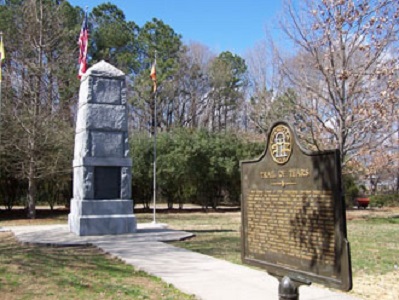
Choctaw removal
United States removal policy forced Choctaw people from their homeland through deadly journeys and broken promises.
- When
- 1830s and later removals
- Where
- Mississippi to Indian Territory, present-day Oklahoma
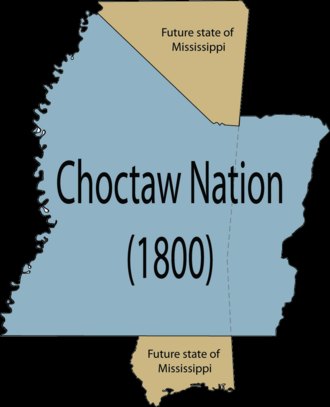
United States removal policy forced Choctaw people from their homeland through deadly journeys and broken promises.
Background
Pressure to surrender a homeland
The Indian Removal Act and the Treaty of Dancing Rabbit Creek opened the way for the seizure of Choctaw land in Mississippi. Treaty promises were made within an unequal political relationship. Some Choctaws sought to remain, but state pressure and failures to honour protections undermined that choice.[1]
What happened
- 1831–1833
The first removal journeys
Choctaw people travelled west through severe weather and poorly organised supply arrangements. Food shortages, disease and exposure caused deaths along the way. The Choctaw Nation describes these first removals as among the darkest periods in its recorded history; later removals continued beyond the initial years.[2]
- 1834
Rebuilding political institutions
Choctaws adopted a new constitution in Indian Territory. Establishing government, schools and communities demonstrated survival after removal, not acceptance of the injustice. Pressure to surrender additional land began even before the first westward journeys had taken place.[3]
Impact & evidence
Maps preserve distinct routes
The Nation's museum and historic-preservation teams have worked to reconstruct removal routes. This separates particular journeys and experiences from the simplified image of one trail. Historical records of rations and transport help reveal administrative failures but do not record every person's suffering or every death.[2]
Aftermath & legacy
Continuity after dispossession
The story is not finished when people reached the west. Those who remained in Mississippi and those who rebuilt elsewhere faced different challenges. Choctaw histories centre the people who endured removal and maintained nationhood, correcting narratives that present dispossession merely as a stage in United States expansion.[3]
Sources & image credits (3)
- Wikipedia — Choctaw Trail of Tears ↗
- Choctaw Nation: Choctaw Removals ↗
- Choctaw Nation: a new homeland, 1830–1840 ↗
Rob ( talk ) Image source ↗