Chechen and Ingush deportation
The collective deportation of Chechen and Ingush peoples under Stalin.
- When
- February 1944–1957 and aftermath
- Where
- North Caucasus and Central Asia, Soviet Union
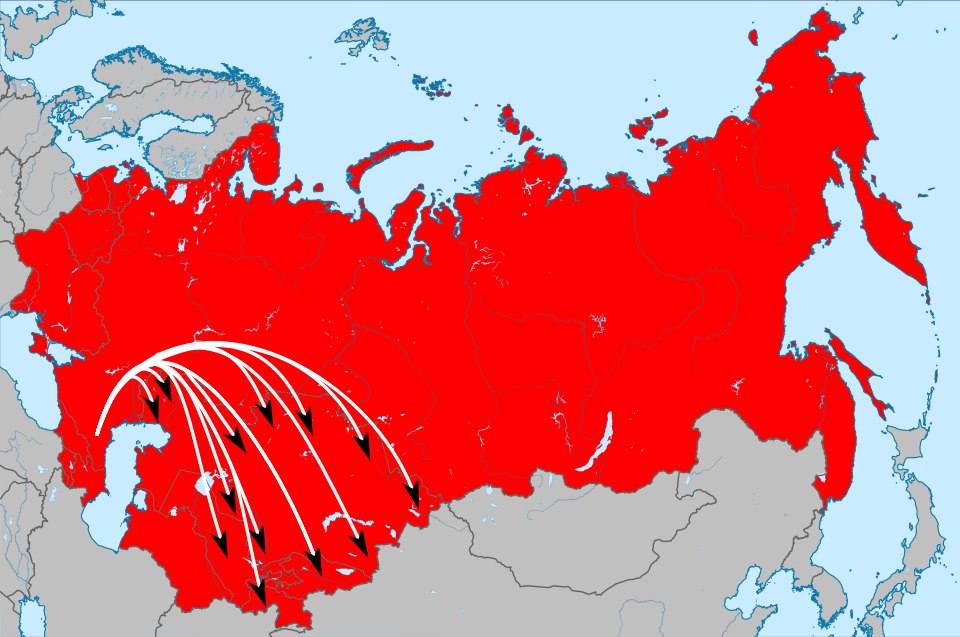
The collective deportation of Chechen and Ingush peoples under Stalin.
Background
Collective accusation
Soviet authorities accused entire populations of disloyalty during the Second World War. Individual conduct was replaced by ethnic classification: children, older people and families of serving soldiers were included in the operation.[1]
What happened
- February 1944
Removal to Central Asia
NKVD forces assembled residents and transported them in freight trains to distant settlements. The Chechen-Ingush autonomous republic was abolished. Deportation removed people from homes, land and institutions while placing them under restrictive special-settlement controls.[1]
- 1944–1957
Life under special-settlement restrictions
Families arriving in Kazakhstan and other destinations faced inadequate shelter, food and medical care. Special-settlement rules restricted movement and required registration with NKVD offices. Compulsory work and separation from homes continued after the initial journey, making deportation an extended system of coercion rather than a single act of removal.[2]
Impact & evidence
Deaths in transit and exile
Historian Aurélie Campana summarises demographic research estimating that approximately 30% of Chechens died between 1944 and 1952. That estimate concerns Chechen deaths across deportation and exile, not both peoples combined or deaths during the train journey alone. A higher demographic-loss figure also includes births that did not occur and cannot be described as a death toll.[2]
Aftermath & legacy
Return did not restore everything
Rehabilitation and restoration of the autonomous republic permitted return, but property disputes and altered settlement patterns persisted. Deportation remains central to Chechen and Ingush historical memory and later arguments about Soviet state violence.[1]
Sources & image credits (2)
- Wikipedia — Operation Lentil (Caucasus) ↗
- Aurélie Campana, Sciences Po: Chechen deportation and mortality ↗
Takhirgeran Umar (Тахиргеран Умар) · CC BY-SA 4.0 Image source ↗