Chalisa famine
A severe food crisis across several northern Indian regions after widespread drought.
- When
- 1783–1784
- Where
- Northern South Asia
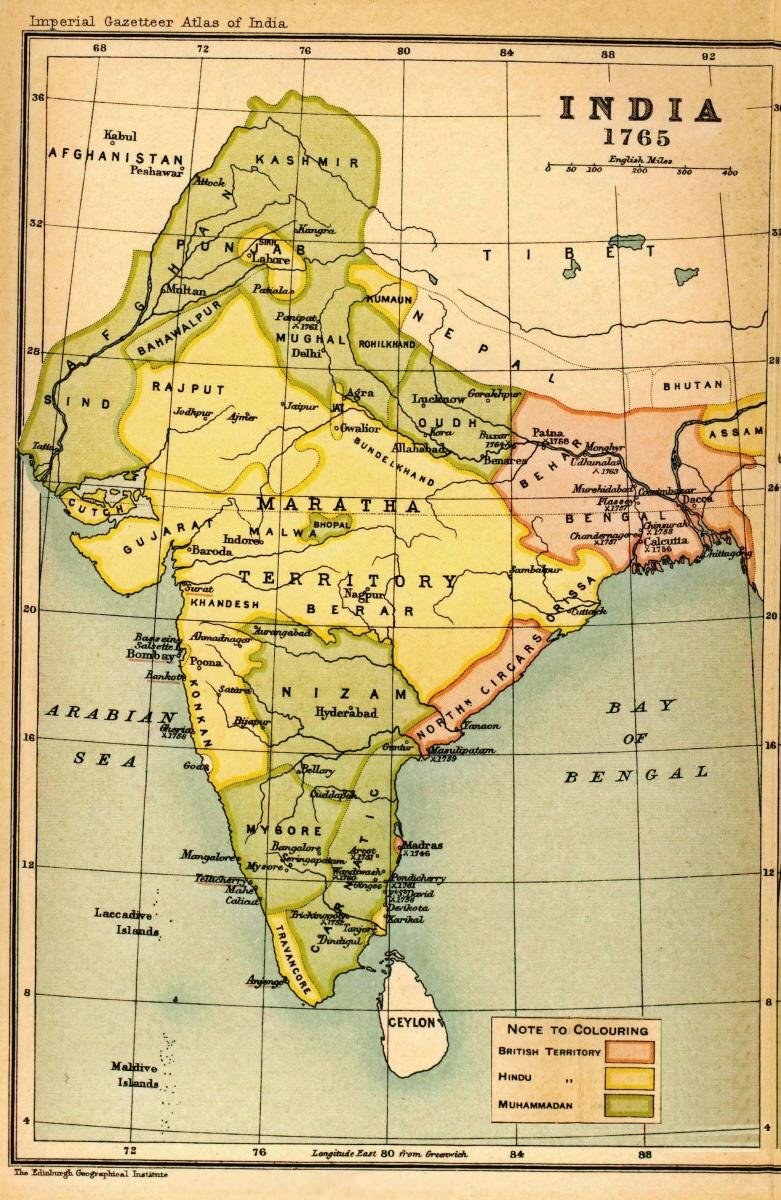
A severe food crisis across several northern Indian regions after widespread drought. The famine affected territories around Delhi, the Punjab, Rajputana and the upper Gangetic plain, among other areas. These places did not form one uniformly governed colony.
Background
A crisis across political boundaries
The famine affected territories around Delhi, the Punjab, Rajputana and the upper Gangetic plain, among other areas. These places did not form one uniformly governed colony. The name refers to the regional calendar year associated with the disaster, while its causes and consequences crossed the boundaries of several states.[1]
What happened
- 1783
Harvest failure and rising prices
Poor monsoon conditions reduced agricultural output and strained food supplies. Households without reserves or purchasing power became especially vulnerable. Livestock losses and disruption of cultivation further weakened the capacity to survive until another harvest.[1]
- 1783–1784
Flight and deserted settlements
Historical records describe serious depopulation in parts of the affected region. People migrated in search of food and work, while disease accompanied hunger. Reports of empty villages therefore record both deaths and movement; they cannot all be converted into fatalities.[1]
Impact & evidence
Separate neighbouring famines
Large totals sometimes associated with this period combine the northern crisis with famine in southern India in preceding years. The surviving evidence does not support a precise independent death count for every area labelled Chalisa. Regional accounts and descriptions of abandoned villages establish severity but require caution when extrapolated across the subcontinent.[2]
Aftermath & legacy
Climate and the conditions of survival
The famine belongs to a wider sequence of late-18th-century climatic disturbances. Its human consequences also depended on grain access, household resources and political responses. Treating northern and southern crises as one event obscures differences in government, timing and the experiences of affected communities.[1]
Sources & image credits (2)
- Wikipedia — Chalisa famine ↗
- University of Exeter Famine and Dearth archive — Historical gazetteer evidence ↗
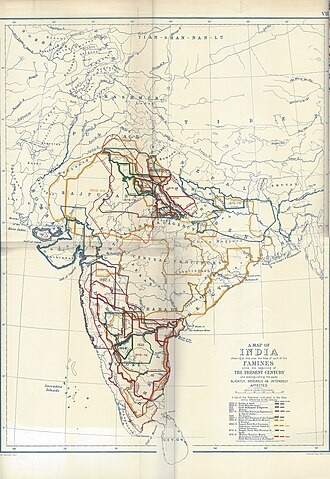
J. G. Bartholomew and Sons. Edinburgh · GFDL (source record). Resized for display. Image source ↗