British Slavery Abolition Act and apprenticeship
Legal emancipation followed by compulsory apprenticeship and compensation for enslavers.
- When
- 1833–1838
- Where
- British slave colonies
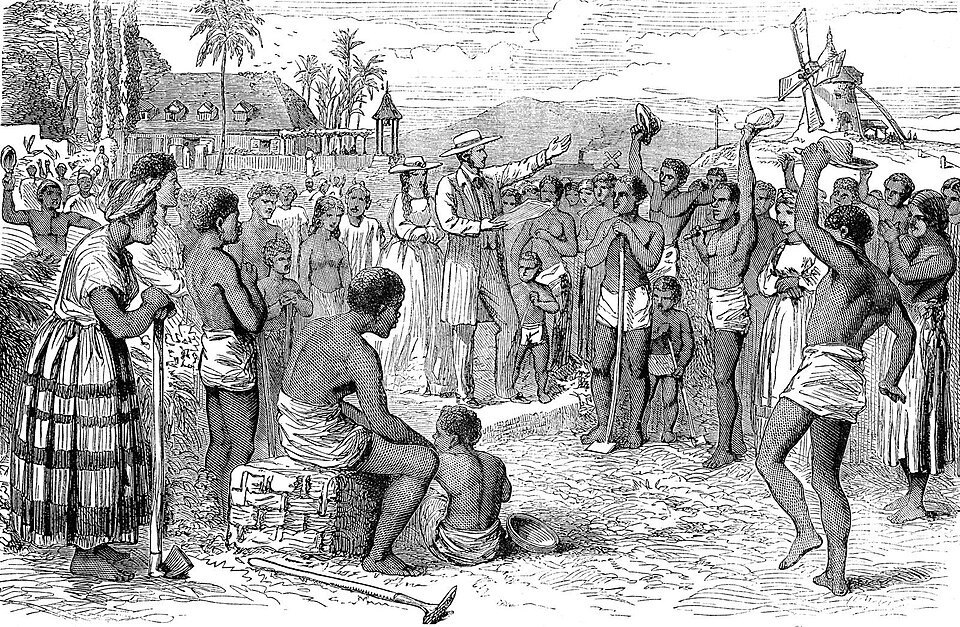
Legal emancipation followed by compulsory apprenticeship and compensation for enslavers.
Background
Resistance and political pressure
Rebellions by enslaved people, abolitionist organising and changing political calculations all contributed to legislation. Emancipation was not simply a gift from Parliament to people who had passively awaited it.[1]
What happened
- 1833–1834
The Act took effect
The law ended legal slavery in the covered colonies from 1834, but many formerly enslaved adults were compelled to continue working as apprentices. The Act had territorial exceptions, including the East India Company’s possessions.[2]
Impact & evidence
Who received compensation
The British government allocated £20 million to compensate slave owners. The people who had been enslaved did not receive an equivalent payment for their labour or suffering. The compensation records now provide evidence of ownership and wealth.[2]
Compensation followed ownership claims
Claimants had to establish their interests in enslaved people to receive compensation. Payments could therefore flow to people in Britain as well as resident colonial owners, including creditors and other beneficiaries of ownership. The resulting records link parliamentary emancipation to a financial settlement that protected property claims created by slavery.[2]
Aftermath & legacy
Apprenticeship ended
Resistance and criticism helped bring apprenticeship to an early end. Formal freedom opened new possibilities but did not automatically redistribute land or remove employers’ coercive power. The distinction between abolition in law and the conditions of free life is essential to the account.[2]
Sources & image credits (2)
Unknown author Unknown author · Public domain Image source ↗