Abolition of slavery in Brazil
The Lei Áurea ending legal slavery after a long struggle by enslaved people and abolitionists.
- When
- 13 May 1888
- Where
- Brazil
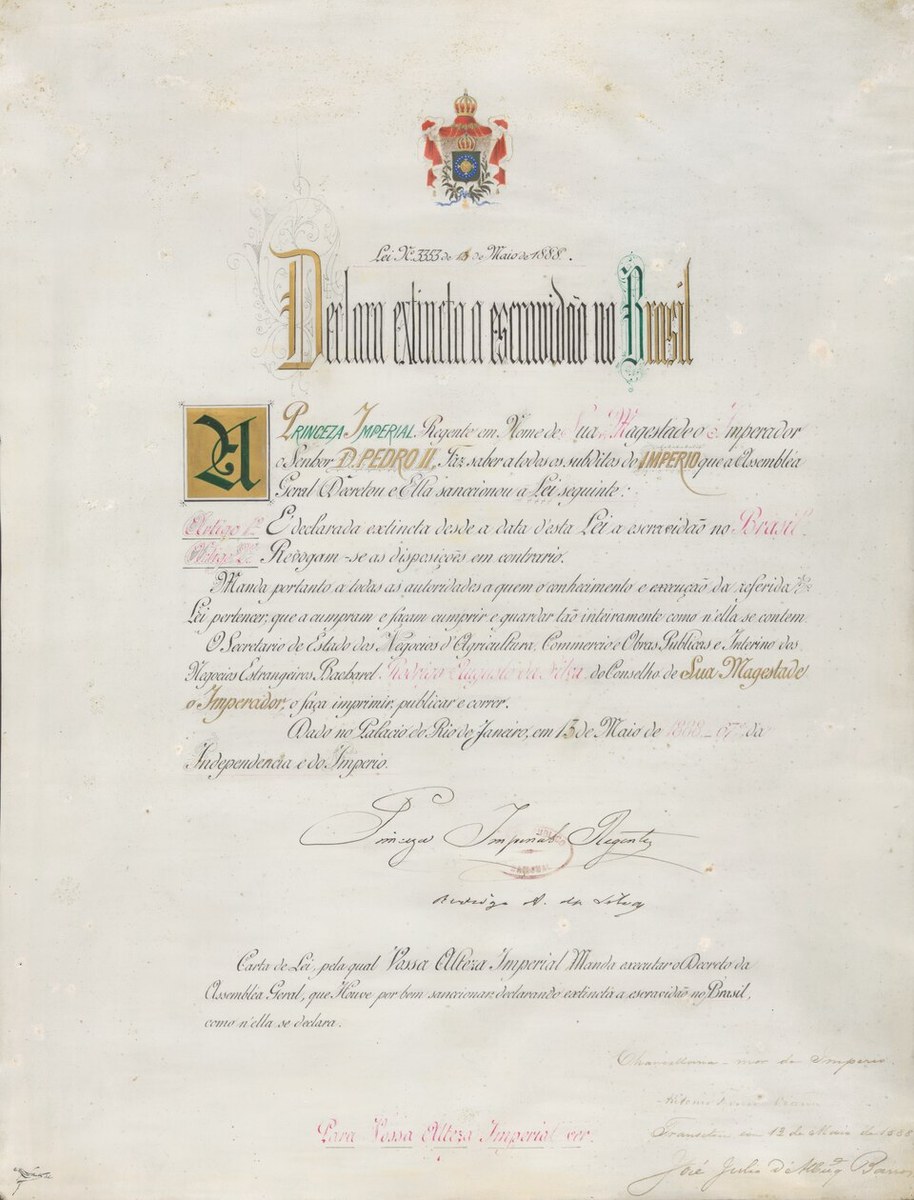
The Lei Áurea ending legal slavery after a long struggle by enslaved people and abolitionists. Brazil received a very large share of the Africans transported through the Atlantic slave trade. Enslaved people worked in plantations, mining, towns and households.
Background
An economy built on enslaved labour
Brazil received a very large share of the Africans transported through the Atlantic slave trade. Enslaved people worked in plantations, mining, towns and households. Resistance included escape, community formation, legal claims and everyday refusal, while organised abolitionism gathered strength in the 19th century.[1]
What happened
- Before 1888
Partial reforms and growing pressure
Earlier legislation restricted the slave trade and created limited routes toward freedom without ending the institution. Enslavers retained control over many people's lives. As escapes and abolitionist networks expanded, the system became harder to sustain politically and practically.[1]
- 13 May 1888
The Golden Law
Princess Isabel, acting as regent, signed the Lei Áurea. Its short text abolished slavery throughout Brazil. The law was a decisive legal break, but it followed sustained action by people who had challenged bondage rather than creating freedom solely through an individual royal gesture.[1]
Impact & evidence
What abolition did not provide
The law ended legal ownership of people but did not establish comprehensive land redistribution, compensation to formerly enslaved people or equal access to education and employment. Former slaves and their families faced the task of securing livelihoods within a society still structured by racial hierarchy.[2]
Aftermath & legacy
A milestone with an unfinished aftermath
Abolition transformed the legal order while leaving deep social inequalities. Commemoration that focuses only on the signature risks overlooking Black organising and survival. The document's importance lies in both its unambiguous end to legal slavery and the contrast between that achievement and the material conditions in which freedom had to be exercised.[1]
Sources & image credits (2)
Senado Imperial · Public domain (source record). Resized for display. Image source ↗