Boxer uprising and the Allied intervention
Anti-foreign mobilisation, killings of Christians and a multinational invasion culminated in occupation and punitive indemnities.
- When
- 1899–1901
- Where
- Northern China, including Beijing and Tianjin
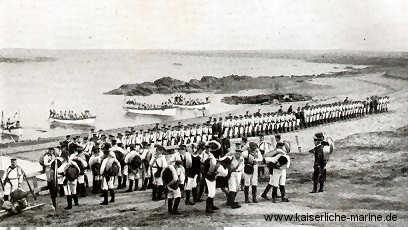
Anti-foreign mobilisation, killings of Christians and a multinational invasion culminated in occupation and punitive indemnities.
Background
A countryside under pressure
The movement known in English as the Boxers developed amid economic distress, missionary expansion and resentment of foreign privileges. Its practices and beliefs varied locally. Chinese Christian communities became targets alongside foreigners; identifying foreign domination as a cause does not erase the violence inflicted on Chinese converts.[1]
What happened
- 1900
Violence and the siege in Beijing
Boxers attacked Christians and foreign-linked property. Sections of the Qing court supported the movement, while other officials resisted that course. Foreign legations and people sheltering with them were besieged in Beijing. The crisis grew into a war involving Qing forces and an alliance of eight foreign powers.[1]
- August 1900
Foreign armies occupy the capital
Allied troops reached Beijing and relieved the legations. Their intervention was followed by looting, punitive expeditions and violence against civilians. The destruction cannot be understood solely through military rescue accounts, which often foreground the danger to foreigners while marginalising Chinese suffering.[1]
Impact & evidence
A settlement paid for by China
The Boxer Protocol imposed an indemnity of 450 million taels, with interest, and authorised foreign garrisons and other restrictions. This was a financial and political punishment imposed on the Qing government and ultimately borne through Chinese resources. It was not compensation distributed to all civilian victims.[2]
Aftermath & legacy
Reading the victors' archive
Diplomatic correspondence records what the intervening states demanded and how they justified it. It is evidence of their policy, not a complete account of every community's experience. The settlement weakened Qing authority and deepened disputes about imperialism, reform and the dynasty's capacity to protect China.[3]
Sources & image credits (3)
- Wikipedia — Boxer Rebellion ↗
- Boxer Protocol: original diplomatic settlement ↗
- United States diplomatic correspondence on the settlement, 1901 ↗
Unknown author Image source ↗