Benin expedition and looting
The British invasion of Benin and dispersal of its royal artworks into overseas collections.
- When
- 1897
- Where
- Benin City, present-day Nigeria
The British invasion of Benin and dispersal of its royal artworks into overseas collections. The Kingdom of Benin had its own royal institutions and trading relationships. British officials sought greater access and political control in the surrounding region.
Background
A kingdom under external pressure
The Kingdom of Benin had its own royal institutions and trading relationships. British officials sought greater access and political control in the surrounding region. When a British-led delegation was attacked in January 1897, Britain used the incident to justify a large military expedition against Benin City.[1]
What happened
- February 1897
Occupation of the royal city
British troops entered and occupied the city. Royal buildings were looted, and much of the city was destroyed by fire. The campaign broke the kingdom's political independence. Oba Ovonramwen was later removed into exile, while the territory was incorporated into the developing British colonial administration.[1]
- 1897 onward
Loot becomes museum property
Thousands of objects were removed, including cast plaques, commemorative heads, ivory carvings and ceremonial items. Some were sold to meet expedition costs; others passed through officers, dealers and institutions. The British Museum records receiving plaques through the British government and later purchases, showing how military seizure was converted into collection ownership.[1]
Impact & evidence
Loss of institutions and historical records
The artworks were not interchangeable valuables. Many carried royal, ceremonial and historical meanings connected to the palace and its communities. Their removal damaged the material record of Benin's government and culture. The extent of human suffering should not be reduced to the number or market value of objects taken.[2]
Aftermath & legacy
Restitution and the question of authority
The dispersal of the Benin objects became a major issue in debates over museum restitution. Provenance records reveal that possession by a museum is not the same as an original consensual transfer. The continuing significance of the expedition includes political conquest, cultural loss, and the authority of the people from whom the works were taken.[1]
Sources & image credits (2)
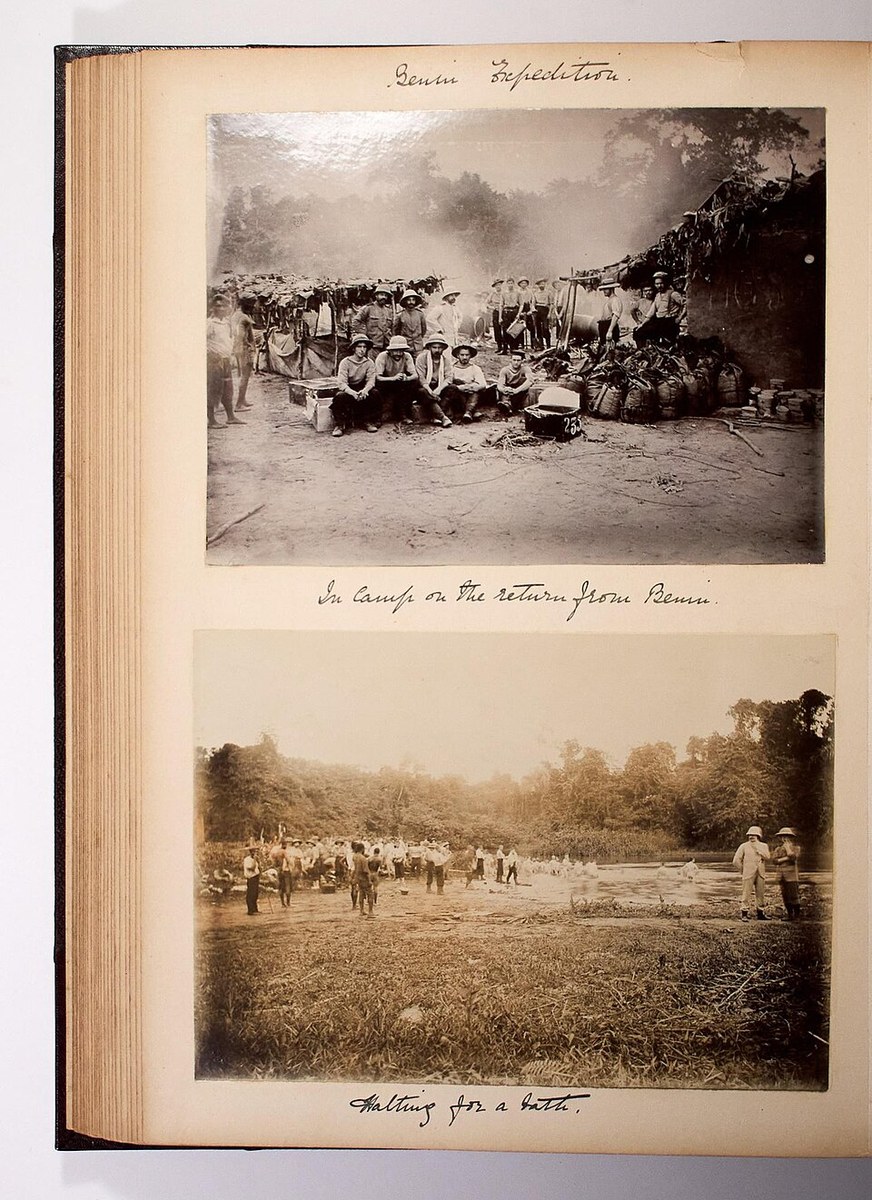
William J. Frazer, expedition album; held by the National Maritime Museum. · Public domain (source record). Resized for display. Image source ↗